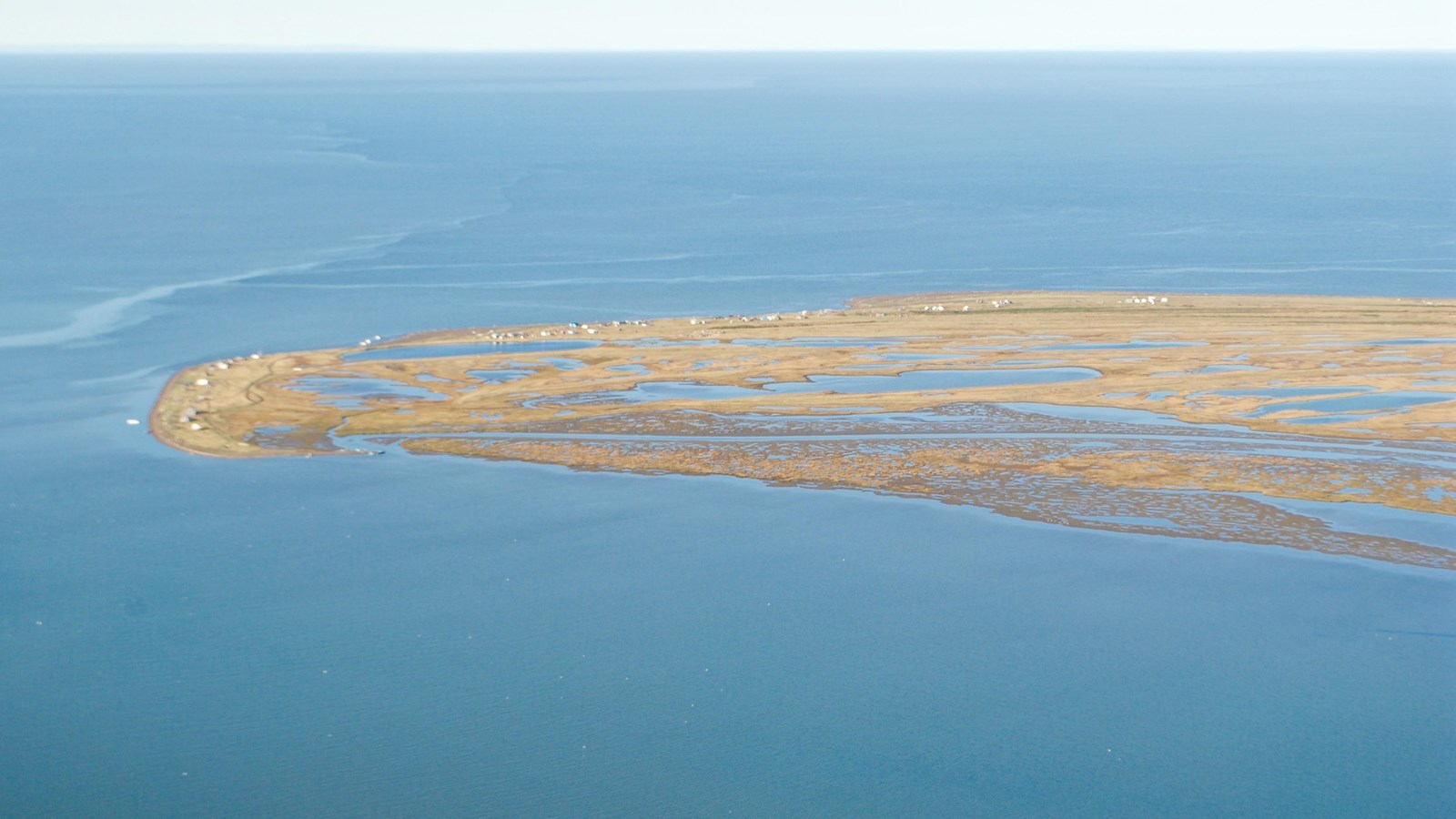
Aerial image of Sisualik and Nuvuraq. Photo from NPS/Cait Johnson.
Aerial image of Sisualik and Nuvuraq. Photo from NPS/Cait Johnson.
By Macy Rae Kenworthy
Spring 2026, FORUM Magazine
I COME FROM a place for belugas.
It’s a place where the tundra grows berries and houses Arctic ground squirrels. A place where the ocean provides sustenance, threat, and comfort. Where little girls and boys grow up running around, playing kickball or softball, learning to shoot guns safely, or maybe even watching movies on DVD if they’re lucky enough to have a gas-powered generator and lots of gas.
My family comes from Sisualik, a spit of land in Northwest Alaska, on the North coast of the Kotzebue Sound. It’s a place that has provided to my ancestors since time immemorial. Sisualik is an Iñupiaq word that translates to “a place for beluga whales.” In Iñupiaq, our placenames often describe the features of the land or activities that happen there. For example, Qikiqtaġruk (more modernly known as Kotzebue) is where my parents raised me and translates to “almost an island” because it’s a spit of land off a peninsula.
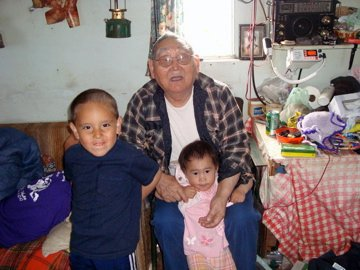
Macy’s taata Perry, brother Joseph, and cousin Helen at their cabin in Sisualik. Photo courtesy of May Punnik Henry.
Sisualik is known for the shallow coastal waters that provide a safe spot for beluga to give birth, feed, and molt their outer layer of flesh. There are also sub-areas of Sisualik, like Nuvuraq, which is a bit more populated with fish camps, and Ikpiagruk, where our family cabin lies, built by hand by my paternal grandfather, next to the old sod house built by his father.
Sisualik is a traditional settlement for Iñupiat where they used to gather and host trade fairs, games, and more for other people passing through from the coast and from the rivers. Now, it is a summer fish camp for families who still practice the same traditions of ugruk (bearded seal) hunting, berry picking, fishing, and more to feed our families all year long. It’s where my childhood ears were blessed enough to hear the most Iñupiaq words and language. It’s where I learned how to use an ulu to cut fish and learned the anatomy of sea animals. And where I learned the health benefits of sargiq (stinkweed), ikuusuk (wild celery), and ayuq (tundra tea).
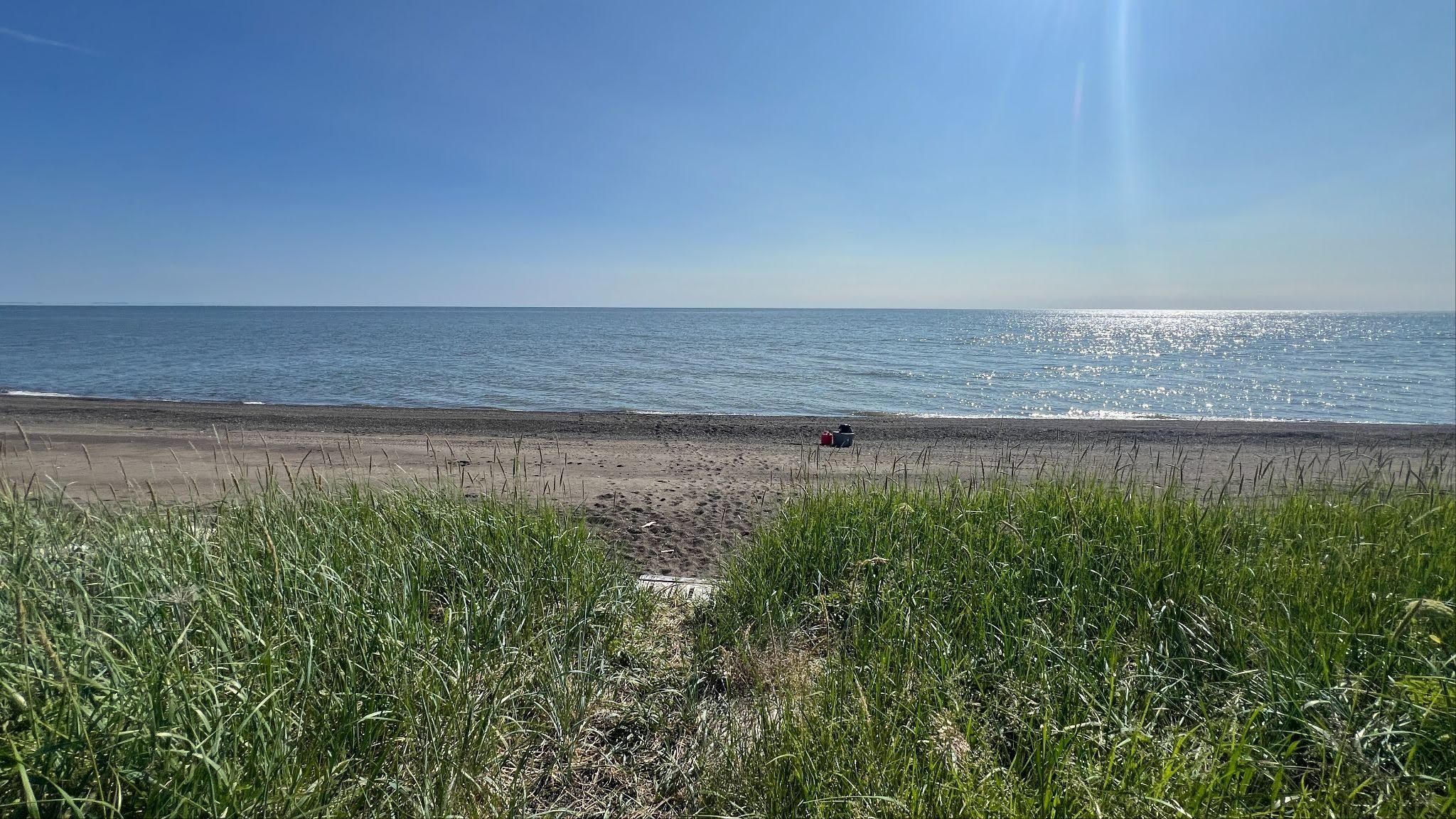
View of the beach and ocean from the Kenworthy’s camp at Sisualik. Photo courtesy of Macy Rae Kenworthy.
I got to co-exist in the same space with muskox butting heads, bears roaming for fish and eating from the same berry patches my mom took me to, and I got stung by jellyfish while playing in the ocean. We were scolded for the noise that we were making because we had to keep the noise levels down to keep the beluga comfortable, because it was their home too.
It was where my aana (grandma) May collected ugruk skins, and then took them back to Kotzebue to process and prepare for sewing. As a child, I had to scrape the skins for what felt like hours with an ikuun (Iñupiaq skin scraping tool) and was watched closely to make sure I never made holes in them.
As an adult, I return to these memories and feelings from my house in a city over 500 miles away. All the connections that I didn’t realize I was blessed to have to my family, to my ancestors, and to the teachings that made me who I am. I think of the time spent at our Harris family reunion, with over 200 of us relatives and descendants of Yiyuk and Argagiaq; everybody who has come from the things that the land has gifted us.
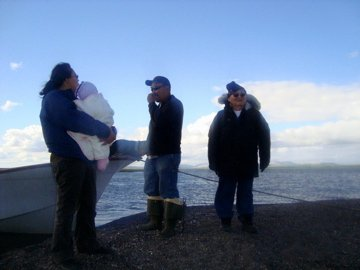
Macy’s parents, niece, and Taata Perry getting ready to go back home from the Harris Family Reunion in Sisualik in 2010. Photo courtesy of May Punnik Henry.
I think of the time spent hearing stories about Sisualik from my taata Perry, son of traditional healer Della Keats, and the way he joked, loved us, and carried the practices he learned from his mother. I think of the time as an adult I’ve spent learning how to sew, and my hands knowing what to do before my brain, from all the time spent watching my grandmother as a child, who never forced me to help, but always let me watch. And I think of the time I’ve spent working in Iñupiaq language revitalization, and all the conversations I didn’t understand as a child, unless I caught words of the animals my family hunted or the places we traveled to.
I find heartache in the idea that my nieces and nephews, who carry my heart, will never get to experience it the way I did: spending summers leaving my friends in Kotzebue to go to camp and coming back with bad tan lines, dirty hair, and stories that I didn’t want to tell because it wasn’t “cool” by children’s standards. I loved to hear stories and was jealous that my best friends got to go to the city and explore the outside world. Those experiences already feel more distant now, as fewer families travel there and the land itself continues to change. But now, as an adult, I get jealous when people tell me they get to go home. And to this day, I long for the day I get to be home. ■
Kikiktagruk Macy Rae Kenworthy (2026 FORUM Storytelling Fellow) is Iñupiaq from Qikiqtaġruk (Kotzebue), Alaska. She grew up learning about her culture and Iñupiaq traditions between there and Sisualik, where her family has thrived for generations. Macy enjoys photography and videography, and has used these skills to document stories from across Alaska. She also enjoys spending as much time as she can out on the tundra with her family and her dog Kaiser Qipmiq, and in Anchorage with her partner and Lucky Dog.
FORUM is a publication of the Alaska Humanities Forum. FORUM aims to increase public understanding of and participation in the humanities. The views expressed by contributors are not necessarily those of the editorial staff or the Alaska Humanities Forum.
The Alaska Humanities Forum is a non-profit, non-partisan organization that designs and facilitates experiences to bridge distance and difference – programming that shares and preserves the stories of people and places across our vast state, and explores what it means to be Alaskan.

July 24, 2026 • Annie Garay
July 23, 2026 • Taylor Strelevitz & Polly Carr
July 17, 2026 • Polly Carr