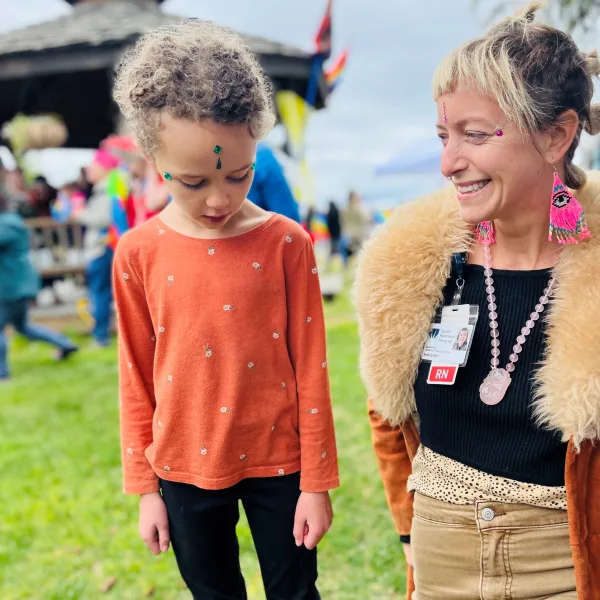
Annie Garay (R), Homer community health educator
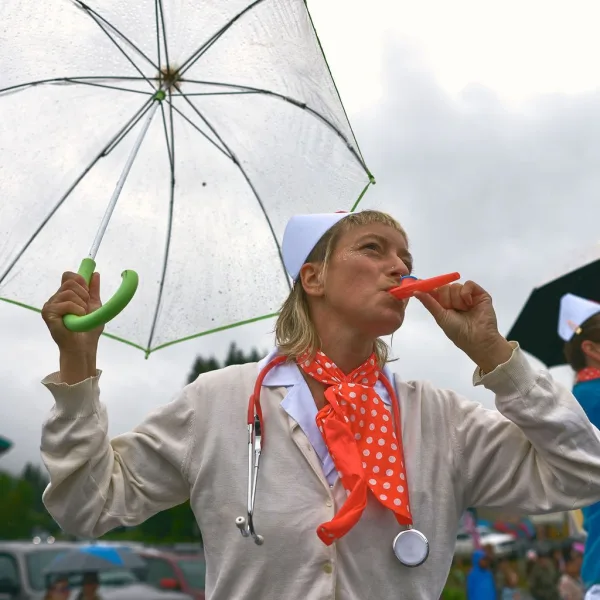
Annie Garay
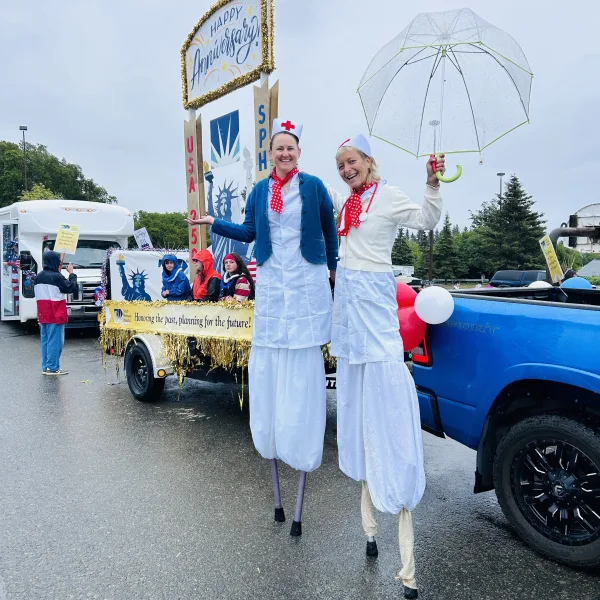
Annie Garay
Annie Garay • July 24, 2026
When I signed up for Hosting Impactful Gatherings, I didn't know a single person who would be there. Spending three days living and learning on a remote island with a group of strangers felt like a healthy mix of intrigue and unknown.
Surprisingly, one of the first things we did wasn't introduce ourselves by our job titles or credentials. Instead, we shared what we had left behind in order to be there. It was such a simple prompt, but it immediately shifted the energy in the room. Rather than defining ourselves by what we do, we connected over our shared humanity. It created a level playing field where everyone had something to offer and something to learn.
Over the next three days, those connections only deepened. We learned together inside a thoughtfully designed space that encouraged curiosity instead of certainty and participation instead of presentation. Some of the most meaningful moments happened between the sessions. Sharing family-style meals around one long table. Walking the beach. Laughing in the sauna. Being off the grid on beautiful Yukon Island without the constant pull of phones, schedules, and daily responsibilities gave us the rare delight of uninterrupted time to be present with one another.
The experience reinforced something I already believed but hadn't fully articulated: meaningful change begins with relationships.
Photos: Scenes from Annie Garay's community health work in Homer.
I'm a Homer-grown gal and a registered nurse serving as the Community Health & Wellness Educator at South Peninsula Hospital. My work focuses on upstream prevention through the lens of the eight dimensions of wellness (physical, emotional, social, intellectual, spiritual, occupational, financial, and environmental). At the heart of all of it is connection. Whether I'm organizing a kids fair, teaching teen Mental Health First Aid, coordinating Senior Wellness Day, offering Wellness Wednesdays, providing harm reduction education, or partnering with organizations throughout our community, my goal is always the same: create spaces where people feel welcome, included, and connected.
A few years ago, the U.S. Surgeon General declared loneliness a public health epidemic. That resonated deeply with me because I see every day how connection influences health. Especially in Alaska, where our long, dark winters can leave people feeling isolated, creating opportunities for people to come together isn't simply a nice community activity, it's prevention. It's building resilience before people find themselves in crisis.
The workshop helped me think differently about how those opportunities are created.
Before the workshop, I probably would have said the gathering itself was the work. Now I see that the gathering is only possible because of everything that happens beforehand. The thoughtful planning, intentional questions, shared agreements, physical environment, the pace, and the invitation for everyone to participate. The facilitators often said that the gathering itself is only a small part of the process, and I found that to be incredibly true. When enough care goes into creating a sturdy container, people naturally bring their experiences, wisdom, and creativity into the room.
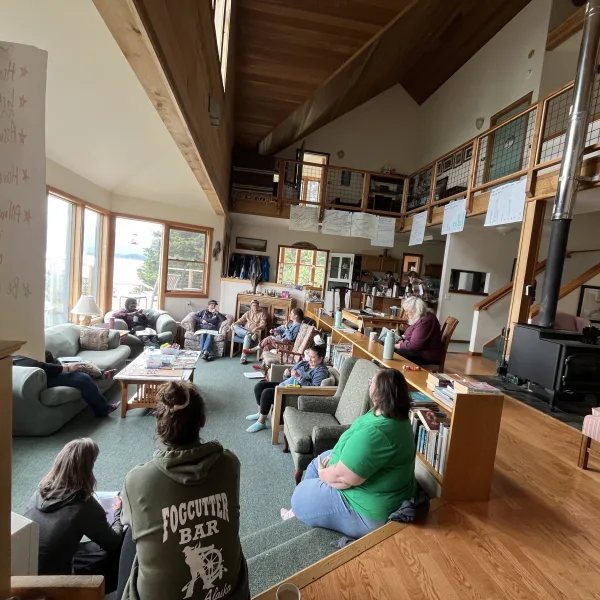
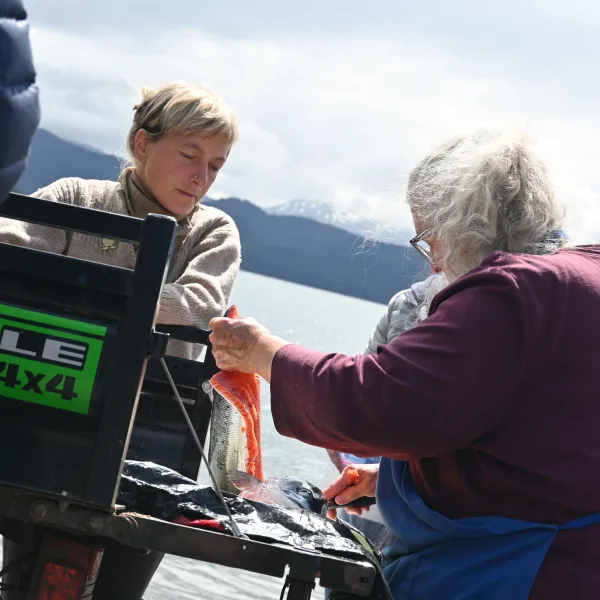
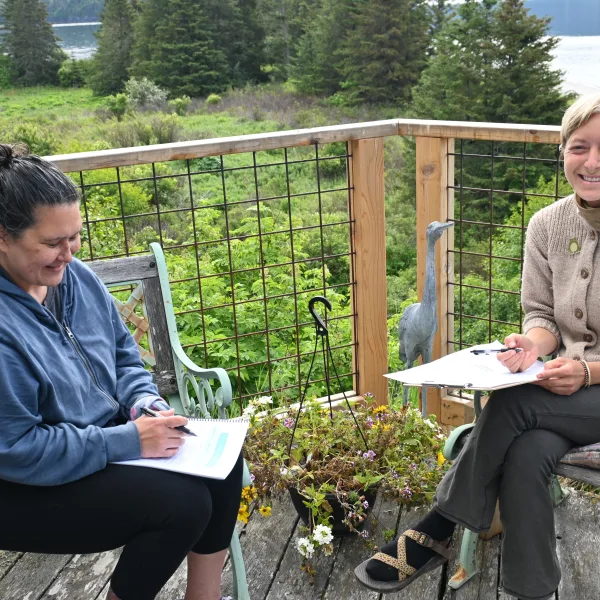
Photos: Scenes from this summer's Hosting Impactful Gatherings workshop on Yukon Island.
Another great takeaway was a renewed sense of appreciation for storytelling.
In healthcare (and arguably in society in general), we're often trained to solve problems. We hear someone's challenge and instinctively begin searching for answers. On Yukon Island, I experienced something different. Instead of rushing toward solutions, we practiced listening, asked thoughtful questions, reflected back what we heard, and we stayed curious. More often than not, people discovered their own answers simply by having the space to explore them out loud. That approach has really stayed with me.
I've spent the last few years thinking a lot about unification- how we bridge divides and create spaces where people with different backgrounds, beliefs, experiences, and perspectives all feel like they belong. The workshop reminded me that relationship-building isn't something that happens after the work begins. It is the work. Trust must come before collaboration if we hope to create lasting change.
I would love to see more nonprofits, schools, healthcare systems, and community leaders adopt participatory approaches to gathering. Our communities are filled with people who care deeply and bring valuable lived experience. When gatherings are intentionally designed to invite every voice into the conversation, people stop feeling like they are being talked to and begin feeling like they are building something together. That's where creativity grows, trust develops, and sustainable solutions begin to unfold.
As I return to my work in Homer, I don't feel like I need to reinvent the programs we already offer. Instead, I'm excited to strengthen them. With a few intentional shifts, I can already see opportunities to deepen connection through storytelling, thoughtful facilitation, and participatory practices that invite people to learn from one another rather than simply receive information.
Over three days of this workshop, I watched a group of strangers become a community. In a world that often feels divided, noisy, and quick to judge, that experience reminded me that the real work happens in real human connection. I look forward to continue weaving this experience forward into my work to build a healthier, stronger, and more resilient community of connectedness.
Learn more about upcoming Forum workshops at https://www.akhf.org/events/
The Alaska Humanities Forum is a non-profit, non-partisan organization that designs and facilitates experiences to bridge distance and difference – programming that shares and preserves the stories of people and places across our vast state, and explores what it means to be Alaskan.

September 21, 2026 • Taylor Strelevitz
August 27, 2026 • Eiden Pospisil
July 24, 2026 • Annie Garay