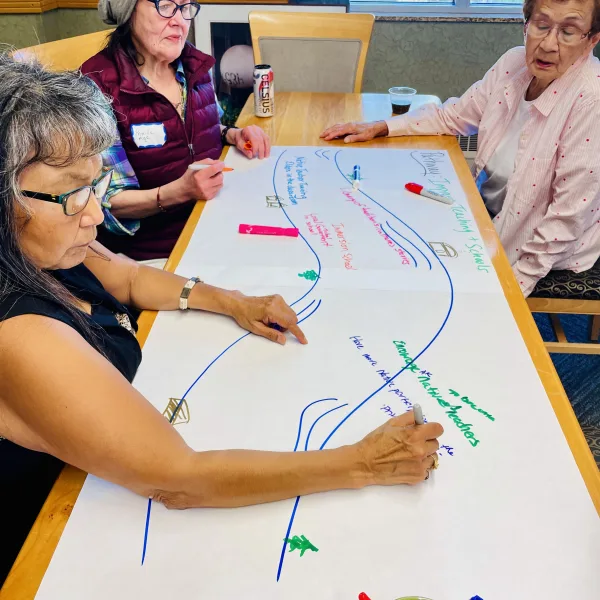
Chugachmiut Tribal Education Committee gathering, Fall 2026
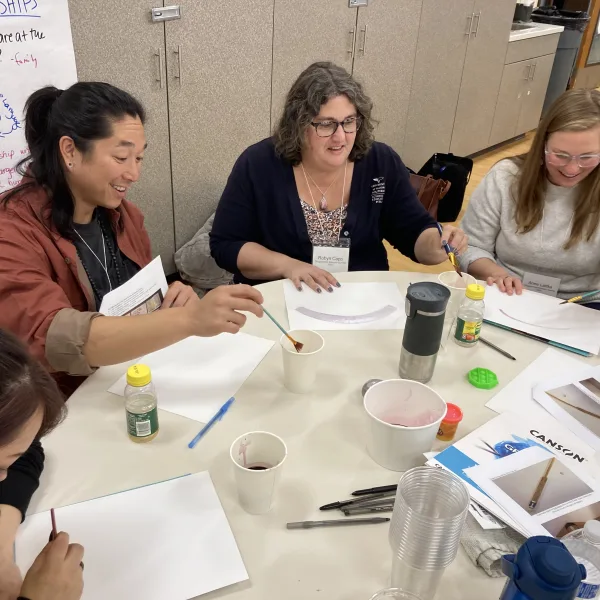
Using blueberry dye at Chugachmiut education gathering, Fall 2026
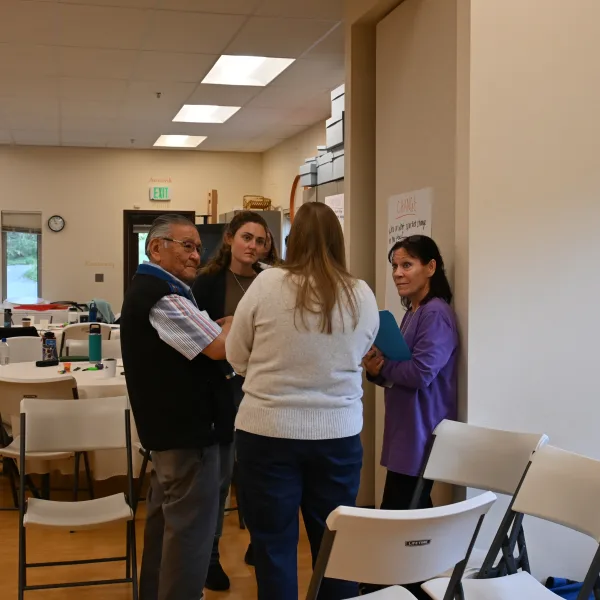
Chugachmiut educator gathering, Fall 2026
Taylor Strelevitz & Polly Carr • July 23, 2026
In late summer 2025, the Alaska Humanities Forum team had the incredible opportunity to partner with Chugachmiut in hosting two significant events: an inaugural Tribal Education Committee meeting and a regional Education Summit, toward the goals of creating a vision and strategic direction for culturally grounded and responsive education in the region, built upon a foundation of trust and collaboration.
When Paul Paasaa McDonogh joined Chugachmiut as Director of Education in January 2024, he arrived with a clear sense of urgency.
"One of the most moving moments in my childhood was learning that the last living Eyak speaker, Chief Marie Smith, had passed," he reflected. "It was a warning sign for all languages in Alaska. If we don't build it now, it won't happen. The knowledge belongs to Native people."
For Paul, the question wasn't simply how to improve schools. It was how to help communities reclaim education in ways that reflected their own languages, histories, and ways of knowing while Elders were still here to guide the work.
For Haley Burnett, a curriculum designer and former Education Manager at Chugachmiut, that vision begins with redefining what education is.
"As Alaska Native people, we believe we are born full human beings, whole and complete," she said. "The foundation of learning is through a spiritual lens. When you learn about the world through that lens, you're touching something in your soul. It's the act of remembering."
She describes learning as something that can't be separated into subjects alone. Language, culture, spirituality, relationships, and the land all inform one another. "Learning is like a story. Everything is meshed together. It's not one single part, it's a mix of everything."
That understanding shaped Chugachmiut's vision for the gatherings. The goal wasn't simply to write a strategic plan, but to imagine what education could look like if it reflected those values.
That vision became the foundation for a partnership between Chugachmiut's Litnaurwik (A Place of Learning) Department of Education and the Alaska Humanities Forum. Rather than beginning with a strategic plan, the work began by bringing people together.
Paul first connected with the Forum as a participant in Leadership Anchorage. When Chugachmiut began envisioning a new future for culturally grounded education across the Chugach region, he reached back out, recognizing the value of bringing people together to build relationships alongside a shared vision.
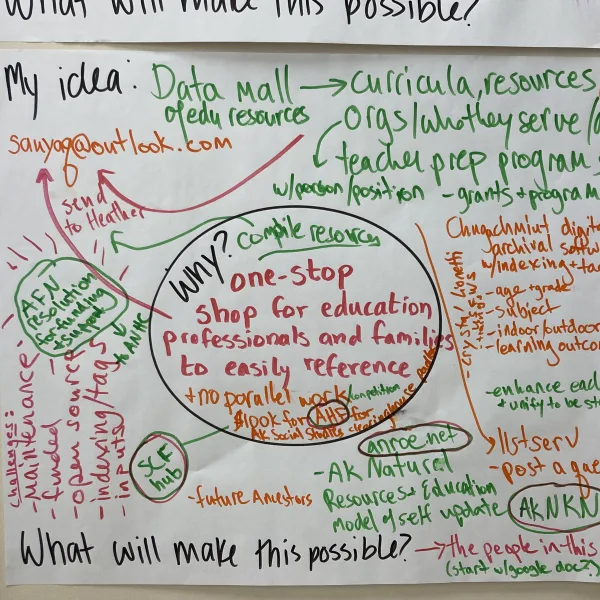
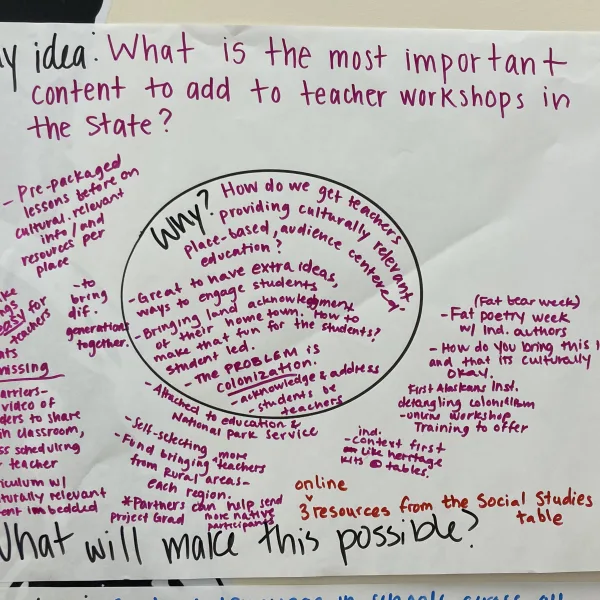
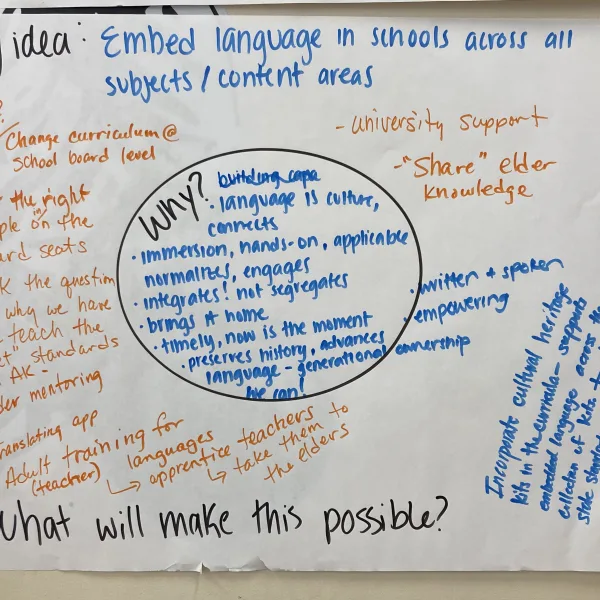
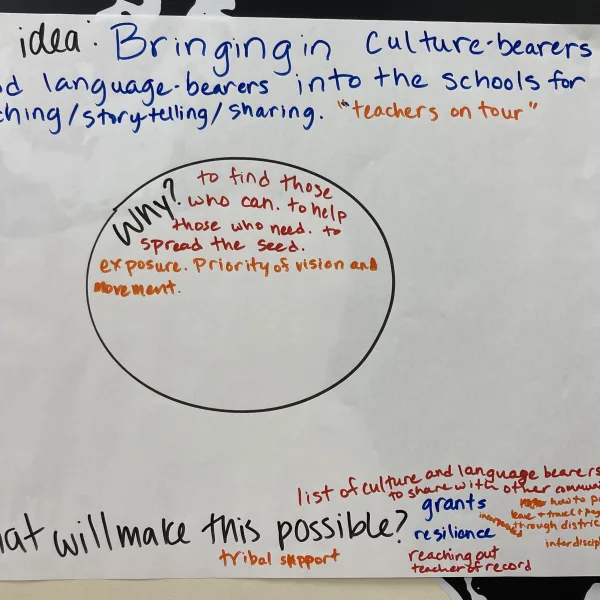
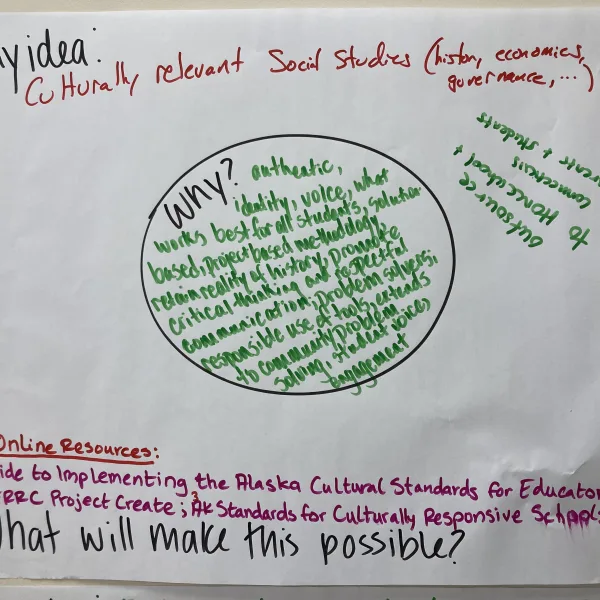
Above: Participant ideas proposed during a Proaction Cafe
In August 2025, 13 members gathered for the inaugural Tribal Education Committee retreat. A month later, more than 35 educators, Elders, community members, and Chugachmiut staff came together for a regional Education Summit. Together, they explored what culturally grounded education could look like across the Chugach region.
The conversations were deeply practical, but also deeply personal. Participants spoke about the educational experiences that had shaped them, the teachings they carried from family and community, and the hopes they held for the next generation. At one point, committee members shared words of wisdom passed down from their ancestors. Between difficult conversations came games, laughter, and opportunities to simply get to know one another.
For Haley, those moments mattered.
"AKHF staff worked hard to build team morale and rapport throughout the gathering," she said. "People really thought about why they were there, what they brought to the table, and how we could support one another. Even now, that sense of trust carries into our committee meetings."
The atmosphere shaped the conversations that followed.
"I think in the work we do, being inspiring and being productive are often at odds," Paul said. "You either create something really meaningful, or you create a strategic plan. This process was both."
Over two gatherings, participants wrestled with difficult questions, imagined new possibilities for education, and identified shared priorities for moving forward. Rather than leaving with ideas that would sit on a shelf, the conversations became the basis for Chugachmiut's emerging vision for education. That work is already taking shape.
Since the summit, Chugachmiut has expanded its culture and heritage programming through three new grants aligned with the vision developed during the gatherings. They are creating teacher-friendly Sugt'stun language resources and an online dictionary, expanding career readiness programming, exploring climate-based education, and continuing to develop the Identity Project curriculum. The Tribal Education Committee has also unanimously adopted a strategic plan rooted in the conversations held in that initial gathering.
For Paul, those efforts are all moving toward the same goal: "Make education ours again."
The Alaska Humanities Forum is a non-profit, non-partisan organization that designs and facilitates experiences to bridge distance and difference – programming that shares and preserves the stories of people and places across our vast state, and explores what it means to be Alaskan.
September 21, 2026 • Taylor Strelevitz
August 27, 2026 • Eiden Pospisil
July 24, 2026 • Annie Garay