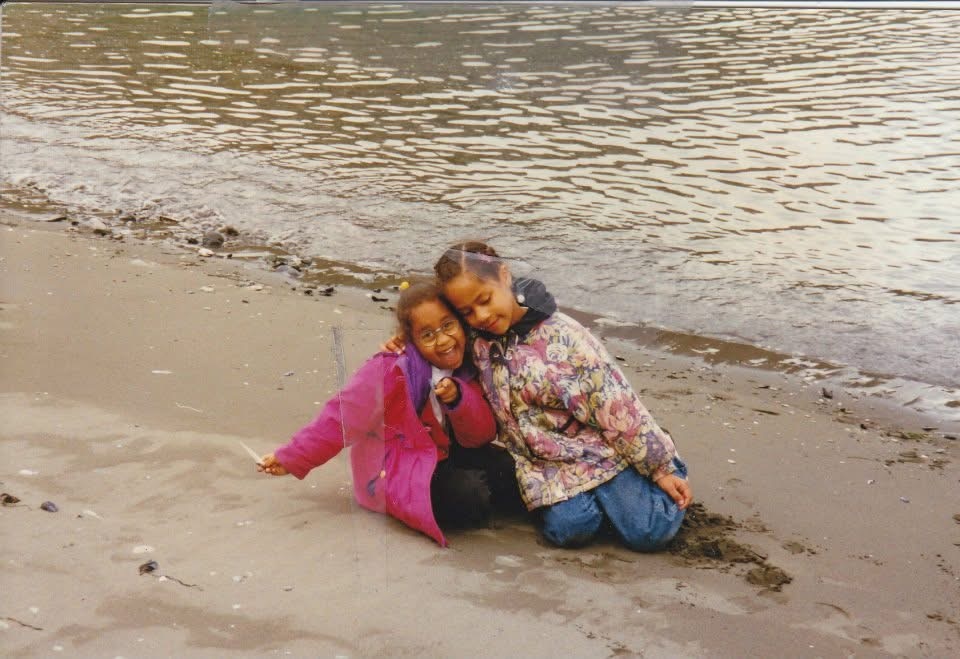
Ashley Powe (Sister) and Brianna Gray in King Cove Alaska. Photo courtesy of Brianna Gray.
Ashley Powe (Sister) and Brianna Gray in King Cove Alaska. Photo courtesy of Brianna Gray.
By Brianna Gray
Spring 2026, FORUM Magazine
I REMEMBER PLAYING OUTSIDE in King Cove as a child, the wind moving through my hair, across my face and around my shoulders. I would sit there and let it move, watching everything around me. That is where I learned how to be still. How to watch. How to pay attention without needing anything to be said.
That is how I first learned to listen.
My grandmother was a woman of few words during my childhood. I don’t remember hearing her voice much, but I remember everything else. I remember her presence, her care, the way she moved through the world. She showed me early on that storytelling is not only something we hear. It is something we watch, something we feel, something we learn by paying attention.
I didn’t realize it then, but I was not just learning my own story. I was learning how our community remembers together.

Courtesy of the Unangan Elders Academy/Association of Unangan Educators/Aleutian Pribilof Islands Association, Inc. Printed by the Alaska Native Knowledge Network. Unangax̂/Aleut Translation by Moses L. Dirks and Illiodor Philemonoff. Photo of the "Islands of the Four Mountains" by Scott Darsney.
In the village, I also started learning about the world in ways I did not yet understand. I remember sitting in class when someone asked what the word negro meant, and I was used as the example. I did not know the word, but I knew how it felt. That moment stayed with me. Not because of what was said, but because of what was not said. No one stopped it. No one explained it. I learned then that storytelling is not just in words, but in systems, in silence, and in what a community allows, protects, or ignores.
Not long after, a family friend pulled me aside in the village. She held her arm next to mine and said, see, we are the same. She told me I would learn to love every part of myself. That moment stayed with me too. It was quiet, but it was powerful. It taught me that sometimes the most important lessons are not loud. They are felt.
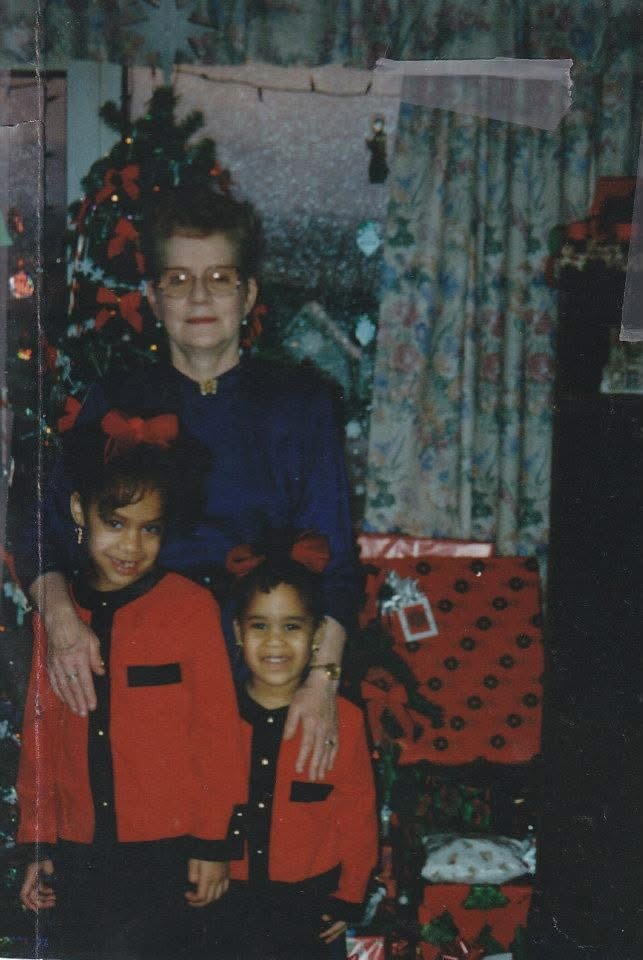
Brianna Gray, Lydia Mack (Grandmother), and Ashley Powe (Sister). Courtesy of Brianna Gray.
My grandfather was loud and full of laughter. I don’t remember much of him, but I remember feeling loved. I remember one time I got in trouble. I don’t remember what I did, but I remember him holding me while I cried, crying with me. Not long after, he passed. I still remember how heavy the shovel felt at his burial. I remember watching my grandmother at the table after, surrounded by people and noise, but everything felt quiet. I could see her world shift without her saying a word.
Every day, she provided. Home cooked meals, a clean home, consistency. She was intentional. Every morning she took time with her hair, placing each curl just right, choosing her outfit with care. Even in silence, she taught me how to show up for myself and others.
She was small, about countertop height, but one of the strongest people I knew. Quick with her hands, reeling in fish without hesitation. In the kitchen, she moved with rhythm. I would watch her purse her lips back and forth while making oatmeal, the same oatmeal I now make for my kids. She cut fish almost every day, fried it crisp just how I liked it, made chimila (raw fish heads covered in pushki [cow parsnip] leaves, baked rolls and maple donuts by hand. We didn’t talk about what she was doing. I just watched. I listened in a different way.
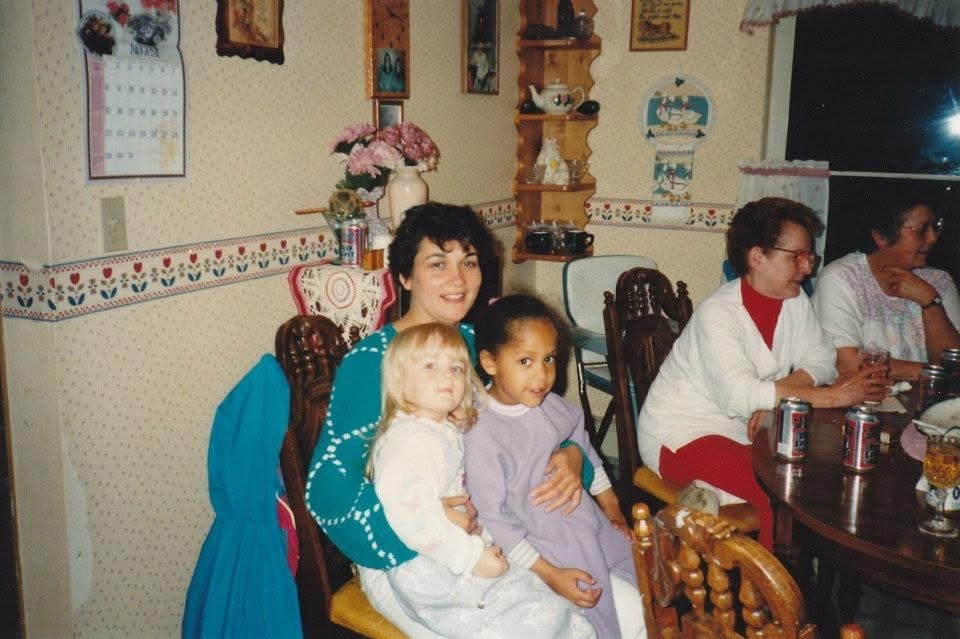
Marisa Melovidov, Cindy Samuelson, Brianna Gray, Lydia Mack in King Cove. Courtesy of Brianna Gray.
I didn’t realize it then, but I was not just learning my own story. I was learning how our community remembers together.
Her home was a gathering place. Polka music, laughter, storytelling over a cold one. We were often told to go to bed, but we could hear everything from the next room. The dinner table felt sacred. That is where I learned that stories are not always told directly. They live in the spaces between people, in the way joy, grief, and love are shared.
At elementary school age, when we left the village and moved to Anchorage, everything shifted. I didn’t transition easily. I missed my grandmother, the rhythm of our life, the connection to land and people. My body felt it too, migraines and a sense of being off. I started to notice how others saw me. Many did not see me as Native. I was identified as a Black woman before I even understood what that meant for myself. In Alaska, across villages and cities, I learned that identity is not always understood the same way, but it is always felt.
We did not talk much about being multicultural in my family. I had to learn through experience, some of it painful. But I also learned through connection and relationships that I did not have to choose one part of myself over another.
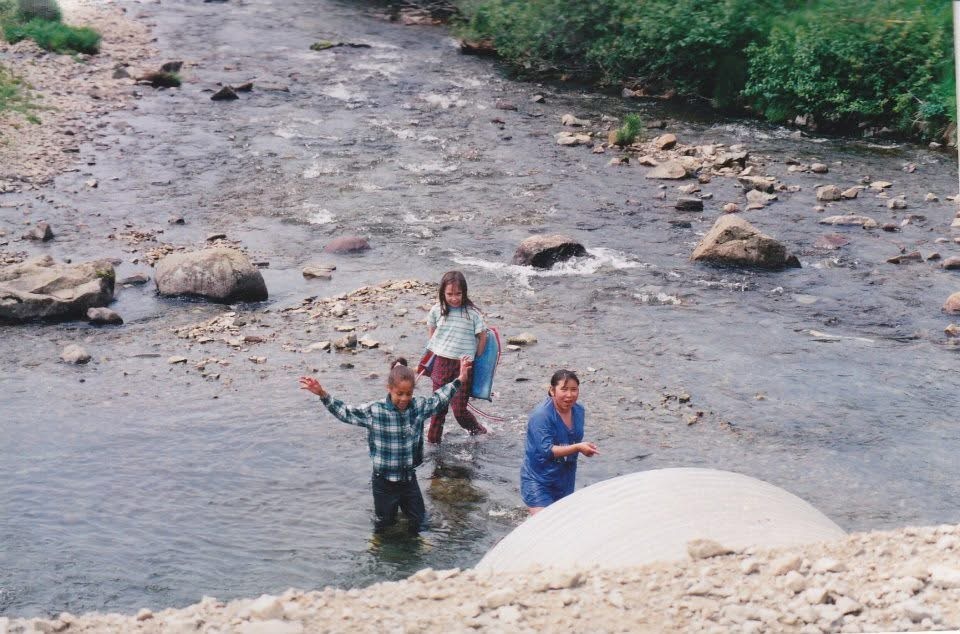
Brianna Gray, Earlene Mack, Jodee Kuzakin in King Cove. Courtesy of Brianna Gray.
When we moved to Fairbanks, I continued to navigate who I was across different spaces. School was not always kind, but I found community in other ways, through friendships, through my mom’s work, through spaces that reflected pieces of me. I began to understand that community is not just where you are from. It is something you carry and create.
Looking back, I realize my grandmother taught me how to listen before I ever had the language for it. Not just listening to words, but listening to people, to patterns, to the way systems operate, to what is said and what is left unsaid. I learned to slow down. To stop talking. To notice who is being cared for and who is not. To notice who feels safe and who does not.
I carry that with me now as a mother, an aunty, a community member. I carry it when I cook, when I braid hair, when I check in on people, when I show up. I carry it when I teach my children what it means to be part of something bigger than themselves. When I show up for my community now, I think about what we are teaching the next generation to notice, to carry, and to protect.
Storytelling, for me, is not just about what is said. It is about what is lived. It is about noticing the systems, the norms, and the quiet acts of care that hold communities together. It is about remembering not just with our minds, but with our bodies, our relationships, and our choices.
That is how I remember my grandmother.
That is how I continue her story. ■
Brianna Gray (2026 FORUM Storytelling Fellow)is originally from King Cove, Alaska, and now resides in North Pole. She is the granddaughter of the late Lydia and Ernest William Mack of King Cove. And the daughter of Dorene Bunch Mack, Lavelle Webb, Chris Bunch, and Silvia Webb. Bri is an Aunty, community leader and Educator who believes in the power of storytelling, relationships, and culture to bring people together. In her work and community life, she centers joy, laughter, and respect as sources of resilience and strength. She is the proud mother of two children, Aaliyah and LaCross III, and shares her home with two cats, Lightening and Beauty.
FORUM is a publication of the Alaska Humanities Forum. FORUM aims to increase public understanding of and participation in the humanities. The views expressed by contributors are not necessarily those of the editorial staff or the Alaska Humanities Forum.
The Alaska Humanities Forum is a non-profit, non-partisan organization that designs and facilitates experiences to bridge distance and difference – programming that shares and preserves the stories of people and places across our vast state, and explores what it means to be Alaskan.

October 19, 2026 • Adam Mackie
September 21, 2026 • Taylor Strelevitz
August 27, 2026 • Eiden Pospisil