Amanda Dale • June 1, 2026
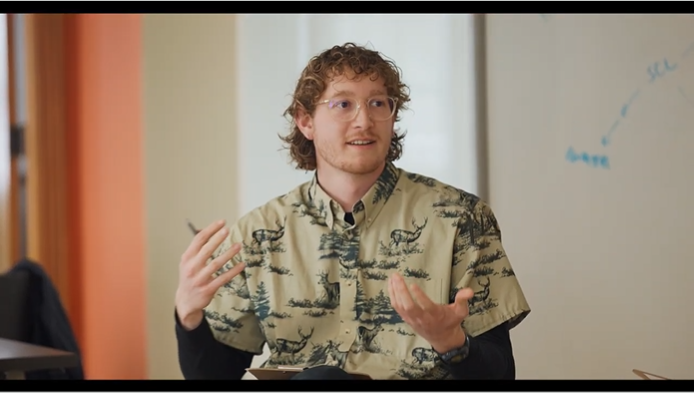
Three years ago, Julian Ramirez moved to Alaska from North Carolina to work as an outdoor guide. Last February, he joined the Forum as our Story Works Program Coordinator, where he found that the program’s focus on helping students make screen-free, one-on-one connections resonated with his own values and priorities. We’re thrilled Julian is a part of Story Works, so we asked him more about how he’s settling in and the impacts he’s already seen Story Works have on students.
What first brought you to Story Works?
Before I came to Alaska I had worked with youth a lot, in traditional school settings and in backcountry guiding trips. Story Works popped up and it looked like an opportunity to make an impact and maybe benefit individuals and larger communities, and also lean into my strengths of working 1-on-1 with people, being face-to-face, having direct conversations, encouraging students to think about values and their roles, and practicing telling stories.
What’s your personal take on the impacts Story Works has on students?
It’s really easy to feel powerless right now and the levers of power - money, influence, audience - are difficult to grasp. To me, impact means positively impacting someone’s life who isn’t necessarily at the table, who our leaders don’t prioritize. I think students and children, their quality of life and how they’re connected to their communities, is often neglected. Something I’ve been thinking about lately is that kids can kind of look like a little starter plant - it’s rooted, in the soil, but the edges are maybe coming out of the container, or it can be underwater, or it can be too isolated. We have to make sure we pay attention to our students when they have so many avenues for disconnecting with each other, so many physical barriers in Alaska, and so many technical barriers to connecting set up by tech companies.
When I’m able to connect 1-on-1 with students, watch them connect with each other and see them share something they might not have shared before… being able to share those means you’re then able to see our shared humanity. To me that’s the most important part of Story Works.
It’s hard for students and young people to really think that they matter. They do matter. Simply by existing they are important.
What were you like as a HS student?
I was trying to fit in, for sure. I was learning how great it is to be social. In elementary school I was very quiet; my parents thought I couldn’t talk to people so they put me in a small private middle school. Then I went to a larger high school, grew into myself a little, learned about having friends in different areas.
I don’t know how I would have felt about Story Works at the time! I think I would have been scared to share something vulnerable. I was still learning who I was, I was trying to create this other identity, trying to fit in. But I also think it would have allowed me to think earlier about what was important to me and that would have been really helpful. Young people are so capable of reflection and awareness; they’re just not often given the chance to do that and to have a voice, to have their reflections be heard.
Did you feel like you mattered?
I thought I would be important and have an impact later. But I don’t think that’s the same as feeling like I mattered. I struggled to think of myself outside of the context of people I already knew, experiences I had in the town I lived in. It didn’t occur to me that other people lived different lives. I think it’s hard to think that you matter when you don’t recognize the differences in all of our lives… We all have valuable, unique experiences, and listening to and sharing stories allows us to recognize that. We matter when we have an impact on one another, when we make connections with one another. Story Works, and the Forum generally, tries to bridge these divides so we can have an impact on one another, so we can learn from each other, and share things about ourselves and our unique experiences.
How has it felt so far working at the Forum?
It feels like we’re teaching, encouraging and showing people how they can care for each other. That’s one reason I like being here - our office culture does reflect our work and our values. I think that helping other people and resisting things like greed and power are things that make us feel good but can be antithetical to the dominant culture around us.
Focusing on the people around us and thinking deeply about how I’m showing up in a community setting and how I’m positively contributing to people around me even if I don’t interact with them are important things that lead to a good life. I think about how I can shape a good life - caring for others, allowing yourself to be cared for… these are difficult things that are incredibly valuable.
Connecting 1-on-1 with a human being without a screen to distract us or facilitate us feels rare now. My dad is a professor and mom has worked in development at nonprofits and I think for both of them, the relational side of their work is the most impactful. My dad has done really cool things in science but he’ll always say the education side and mentorship are the most impactful things for him. He’s taught so many people who are now teachers and doctors. We had students over for dinner, just having conversations. This was the most visible part of his job for me. There were no screens; it was just about connecting.
I hope that as technologies that divide us become more prevalent and powerful, we all start to realize how bad that makes us feel! And we return to these very core human activities of talking face to face and doing things together. I think that will lead to people caring more about each other and I hope that makes its way up to the decision-makers, and leads to more humane and empathetic decisions.
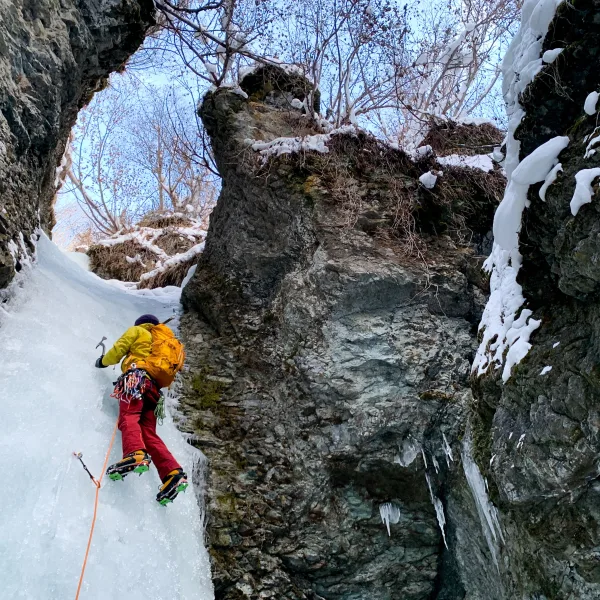
Outside of work, Julian enjoys fishing, backcountry skiing and writing stories.
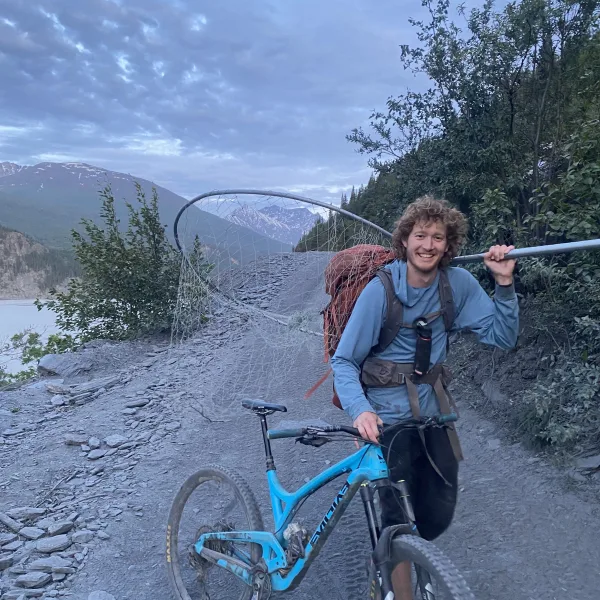
Outside of work, Julian enjoys fishing, backcountry skiing and writing stories.
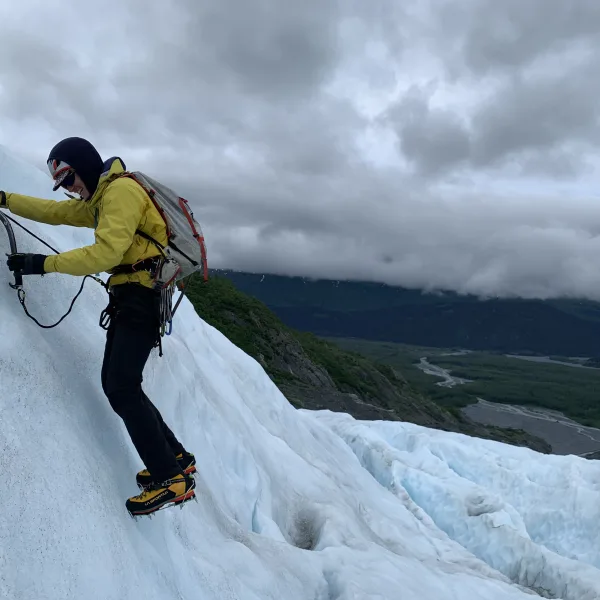
Outside of work, Julian enjoys fishing, backcountry skiing and writing stories.
Why have you stayed in Alaska?
A lot of reasons! It feels like people here are focused on a high quality of life, in terms of access to activity, connecting with one another - I think there’s more of a philosophy here of bringing people in and supporting them, maybe because it’s a hard place to live and you benefit when you have more people to rely on and that goes both ways. Access to our food systems is important to me - high-quality natural foods is super important. I think all of that speaks to how people choose to live their lives here.
You catch fish and share it with people - you work so hard with someone, get a ton of fish, and then share it with people - I hadn’t experienced that before Alaska.
Anchorage is also a place where you can make an impact. You see your representatives at the grocery store. People making decisions are your neighbors. I think outside of Alaska, there’s a huge disconnect. In North Carolina, meeting a senator wouldn’t even cross my mind. But here you might run into Lisa Murkowski, or an Assemblyperson - you might work with one! - it just feels like you can have an impact. Your opinion can count here.
Was there a moment where it felt like, “OK, so *this* is what it’s like at the Forum?”
Doing check-in questions at all staff meetings! It can be intimidating to have 20 people sit and listen to you and actually hear what you’re saying. It’s also so rewarding to have that experience. I don’t feel like I often have the opportunity to challenge myself to say what I really think knowing that people are really going to be listening to me. Conversations often move so quickly. If someone’s really listening to what you’re saying it forces you to think more about it.
At the end of our first Story Works workshop, the days where students tell their stories, I remember just sitting there and thinking, I’m getting paid to be here and listen to student stories and see how far they’ve come and see how they’re all listening to each other. And seeing students who have been very protective and scared about sharing their stories, because they are about hard things… watching them share that and seeing their reactions when the class applauds and genuinely appreciates what they shared is hugely rewarding and gives me hope.
Being here at the Forum, being surrounded by employees who generally care about their emotional well-being and the emotional well-being of the people we serve is just an enriching environment to be in. It gives me a lot of hope. It feels like there is a purpose to all of this.
The Alaska Humanities Forum is a non-profit, non-partisan organization that designs and facilitates experiences to bridge distance and difference – programming that shares and preserves the stories of people and places across our vast state, and explores what it means to be Alaskan.
September 21, 2026 • Taylor Strelevitz
August 27, 2026 • Eiden Pospisil
July 24, 2026 • Annie Garay