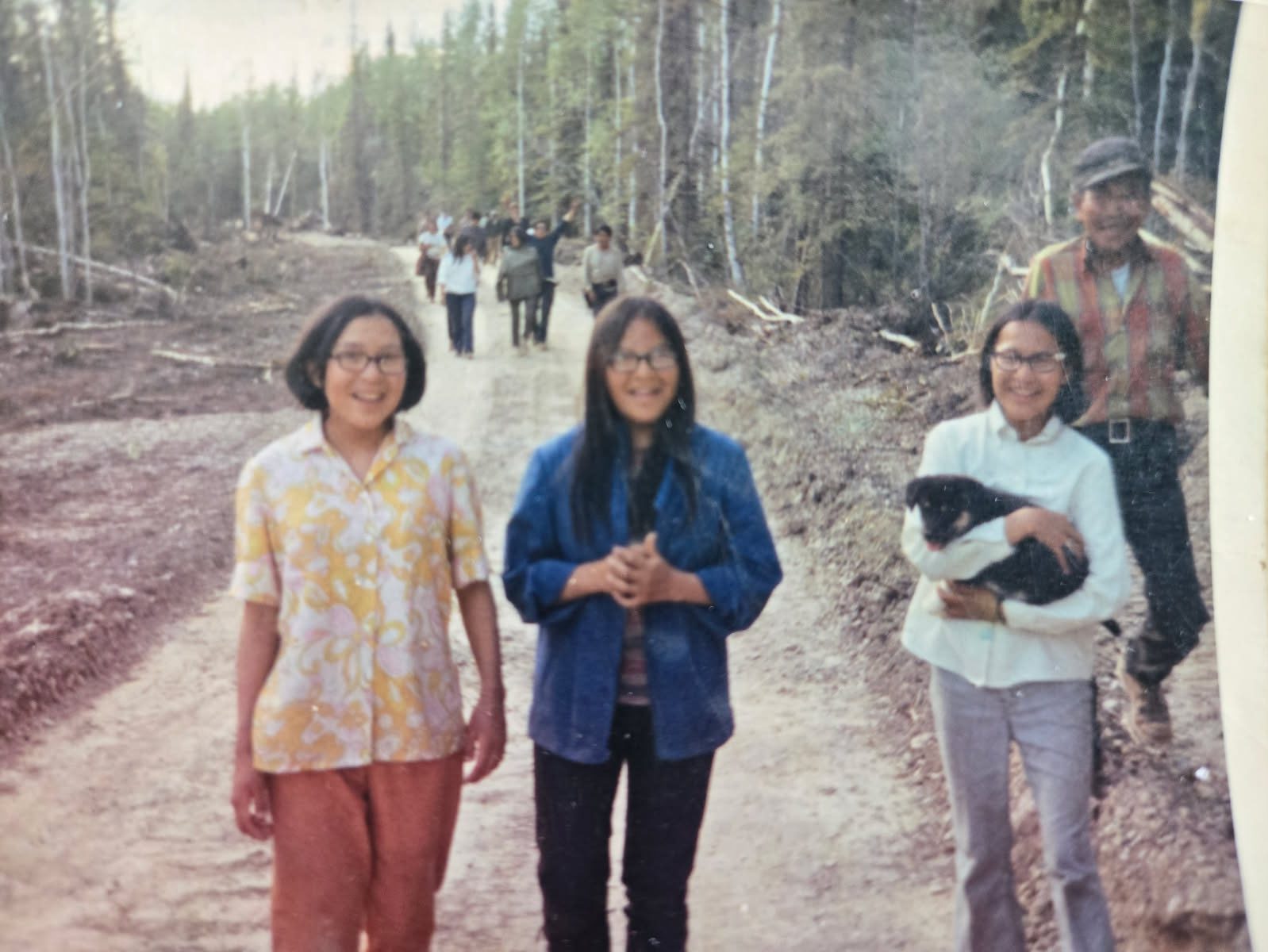
Minto girls walking the new road to Fairbanks, 1971. Photo credit: Walter Titus.
Minto girls walking the new road to Fairbanks, 1971. Photo credit: Walter Titus.
By Irene Sherry
Spring 2026, FORUM Magazine
IN THE 1950s, you could only travel to and from our small village of Minto by airplane, riverboat, dog team, or walking. We had a few visitors and rarely went to the city up the river. Ours was a peaceful little village.
In 1970, our village was flooded, and we moved the following year to ‘new Minto’, 25 miles away. The state built a road to connect us with the Elliott Highway to Fairbanks.
In the beginning, it was good, as we could now drive to Fairbanks for shopping, saving us from flying our groceries home. Little did we know that the road also gave access to all kinds of traffic and all kinds of people.
It was the summer of 1974. Green trees, green grass, blue skies, and blue waters. People were getting ready for fishing, mending nets, picking berries, packing supplies, and getting boats ready.
Long daylight hours, sun shining late into the nights. You could hear kids riding bikes up and down the streets, and a baseball game was going on back at the playground. Grandmas and mothers sitting on their porches, drinking tea, and watching the younger ones.
I was a young Athabascan woman, just graduated from high school, dreaming about what kind of work I wanted to do, and where I should go for more education. My cousins and I heard some rumors about one of my cousins being missing in the small town of Nenana, three hours by boat upriver. All the young men went to Nenana to be in a search party. There was only one telephone in the community, so we really didn’t know what was going on. Suddenly, fear fell over the village.
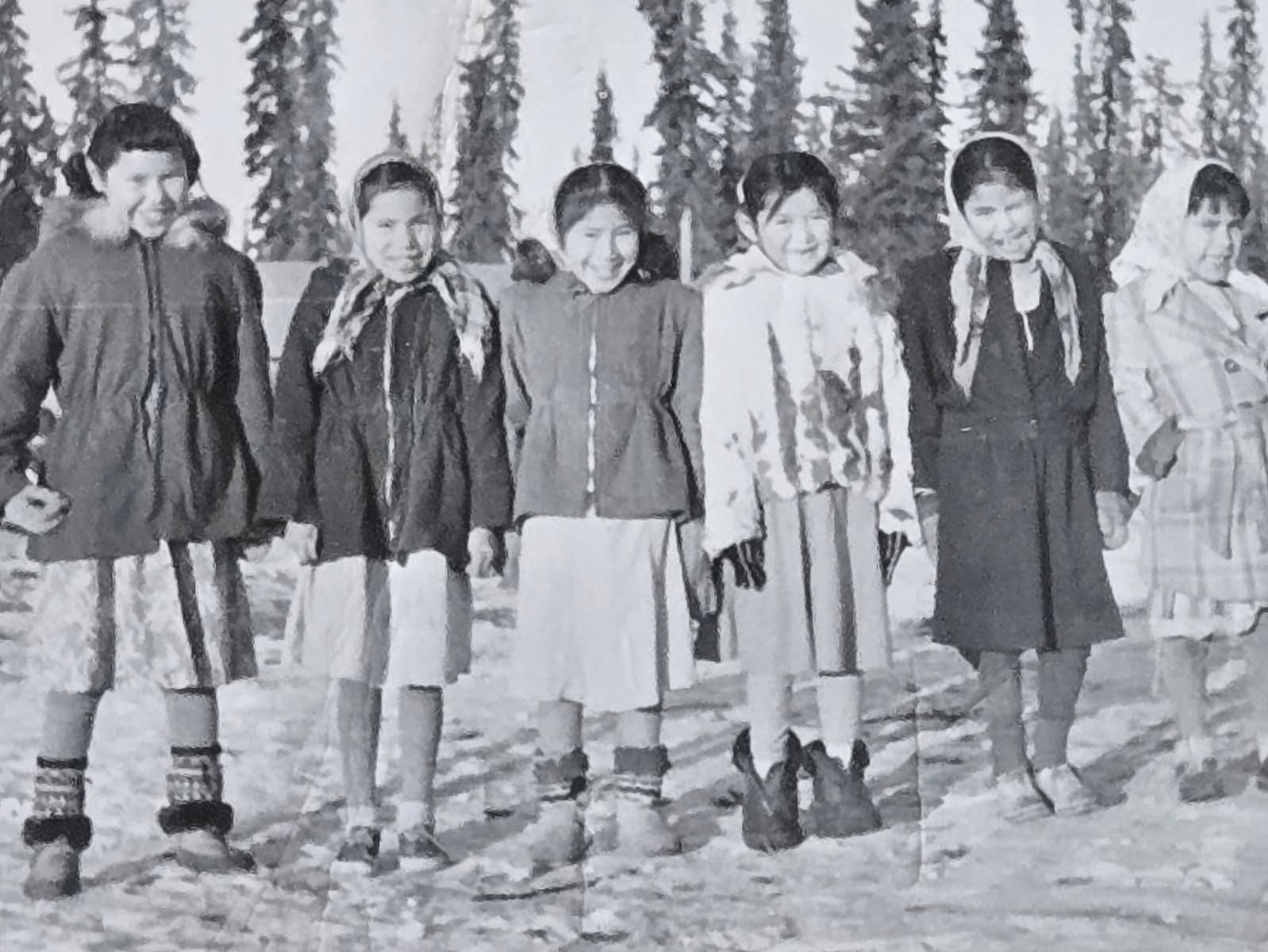
Schoolgirls at Old Minto. Photo Credit: Walter Titus.
Before, we had never been afraid of strangers, but suddenly we became suspicious of anyone coming into the village. Women moved in with each other while the men were gone. Conversations got very quiet.
Later that year, my cousin Vera and I decided to go to Fairbanks to look for some jobs. We caught a ride with an old man with a van. Morrie used to come to Minto to give people rides as needed. We stayed with several different people, cousins, and family members.
There were a lot of new people in Fairbanks. GI’s coming home from Vietnam, and truckers hauling materials and building the new road for the pipeline to Prudhoe Bay. There were a lot of bars, gambling, and prostitutes.
During that time, there were two more ladies I knew who were also missing. Friends would call friends to tell them to be careful and not go around alone. We hear of search parties happening.
What made it real was when my cousin and I were going to the State Fair, where we met up with others and had a great time, going on the rides, listening to music, eating cotton candy, hot dogs, and chocolate-covered strawberries.
My cousin Janet said she wanted to go home, but we weren’t ready to go. She said she was going to hitchhike out to her place in North Pole. Just then, Agnes Mayo came up to us and invited us to stay at her home that night, so we did.
The next day, we went around town, shopping and eating. We weren’t able to get a hold of Janet when we went back to the fair for a second day. By the third day, everyone was getting worried about her. We heard messages on the radio from the Fairbanks Native Association saying we should call them to get a ride if needed.
My cousin Janet was always positive, always outgoing, always laughing and talking with us. Sometimes serious: “Don’t forget to say your prayers.”
Vera and I went back home to Minto. We heard that some stranger had come into the village, and scared some of the kids swimming down by the riverbank. Some residents said they saw someone in the woods near the side of the road. Some of the men went out searching and found this guy’s cache of food.
That’s when we heard that the Troopers had found Janet’s remains near the Elliott Highway, about 40 miles north of Fairbanks. The news threw the whole village into a time of fear.
After all that happened, the whole village was not the same. More protective of our children. More careful about who we invite in. We lost a long-standing sense of peace that was there before all this happened.
We could no longer trust anyone who came into the village
We lost our trust in people, and lost peace.
My cousin Janet was always positive, always outgoing, always laughing and talking with us. Sometimes serious: “Don’t forget to say your prayers.”
She had shoulder-length black hair, very pretty. She lived across the street from my Dad’s house, so we always visited and walked around the village, sharing our dreams.
When telling stories of the past, I have never forgotten her and her beautiful smile. She was a friend, and I miss her. ■
Irene Sherry (2026 FORUM Storytelling Fellow) is an Athabascan woman from the village of Minto Alaska. She is a wife, mother, grandmother, boarding school survivor, film producer, counselor, student mentor, and prayer warrior.
FORUM is a publication of the Alaska Humanities Forum. FORUM aims to increase public understanding of and participation in the humanities. The views expressed by contributors are not necessarily those of the editorial staff or the Alaska Humanities Forum.
The Alaska Humanities Forum is a non-profit, non-partisan organization that designs and facilitates experiences to bridge distance and difference – programming that shares and preserves the stories of people and places across our vast state, and explores what it means to be Alaskan.

October 19, 2026 • Adam Mackie
September 21, 2026 • Taylor Strelevitz
August 27, 2026 • Eiden Pospisil