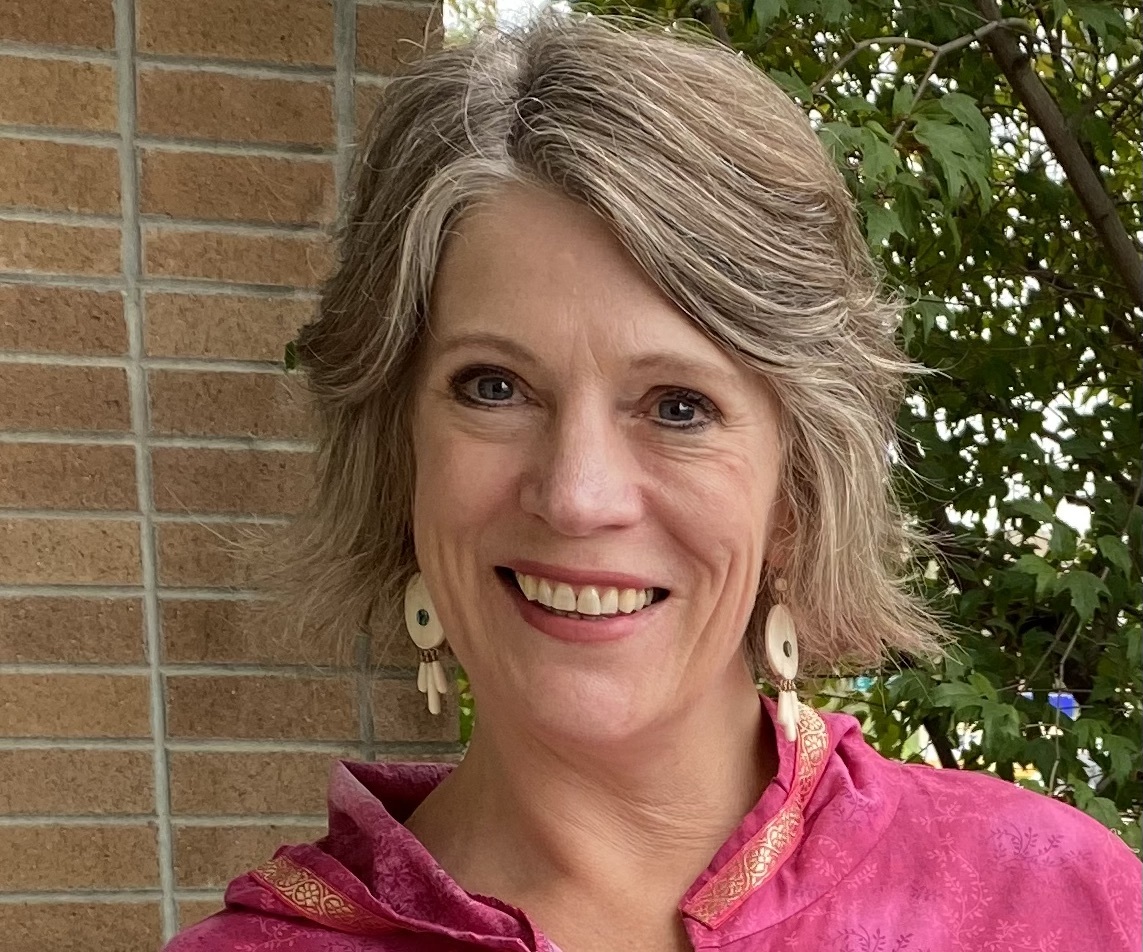
Joelle Hall, winner of the 2025 Leadership Anchorage Mentor Award
Polly Carr • January 28, 2026
Vice President of Programs Polly Carr (LA3 alum and former LA Mentor) sat down with Joelle Hall, 3-time LA Mentor and winner of the 2025 Leadership Anchorage Mentor Award to hear her mentorship reflections and insights. Joelle was a mentor to Tiffany Hall (LA17), then Claire Pywell (LA19), and most recently Michael Thomas (LA28).
Joelle Hall, winner of the 2025 Leadership Anchorage Mentor Award
How did you first become a Leadership Anchorage Mentor?
My first mentoring experience was with Tiffany Hall, whom I had never met before. I was initially surprised that a complete stranger would reach out… I was curious: why me? But, it was flattering to be asked!
Tiffany, Claire [Pywell], and Michael [Thomas] all had very different jobs than me, and were looking for different things. But they all wanted to make a difference. People in Leadership Anchorage have an earnest sense of wanting to make a difference- in their lives, for their communities. They are really community-oriented.
Why do you Mentor?
I do it because it was done for me, and I think it’s something we all should be doing. Anchorage and Alaska are places where you can be anything you want, and the quickest way to get there is through relationships and connections with other people. I had so many people who were willing to help me when I was younger, helped me take giant leaps of faith during my career. In Alaska people swoop you up, take you in, and help you on your way – that’s been my experience. I want to make sure the next generation has the same grace that I experienced.
How have your mentors differed in what they taught you or in their support of your growth?
When I started to find a job, the first thing I did was being a UA intern working for Fran Ulmer. She offered me an example of how you lead a public life and be really authentic to yourself, and hold true to your values; that it’s possible to be true to yourself and do important things with integrity. That was really empowering for me. Deborah Bonito was another mentor whom I worked for, for two years. I learned so much from her: how to be focused, tenacious, think ahead, and organize – she was a manager in the best possible way. Vince Beltrami allowed me to apprentice with him for a decade and a half, and he put me in situations where I had to lead.
What does mentorship mean and look like to you?
You meet someone where they are at. At an earlier stage, it might be more about career steps or skills, and then later it might be more about building confidence to lead.
Mentoring is directed cheerleading and support for someone who is presenting you with some noise in their life, and you need to look through the noise and identify what they are really or truly excited, nervous or upset about. It is offering an outside perspective by someone who is totally in your corner. It’s not that I may have something specific to offer someone, but as I get to know you, if I find you to be a person of integrity, I am on your team. And I am going to be on your team to help you move through this thing in your life.
How do you think mentoring has changed or impacted you?
Mentoring asks you to stop for a moment, get out of your own life, and really think about someone else for a while. It’s a great opportunity. I want to be in service to others, and the lever I move (in my work) to make change is public policy. But mentoring allows me to be engaged in a more one-on-one experience, to be a little bit more personally engaged in the things that make peoples’ lives better. I can see that I am making a difference. It makes me feel connected in a different way, in a different aspect of change.
What advice would you give anyone considering being a mentor?
You’re never going to look back on an opportunity to help someone (through mentoring) and say “I wish I hadn’t done that!” You’re going to say, I feel really good about what I did: maybe I helped this person, but more importantly, I’ve really seen this person, who may have been a stranger to me before. You just have to decide that you have a little bit of bandwidth to be on someone’s team. I think this is one of the most sweet, imaginable things about us as Alaskans… we help each other. It’s one of our best traits.
The Alaska Humanities Forum is a non-profit, non-partisan organization that designs and facilitates experiences to bridge distance and difference – programming that shares and preserves the stories of people and places across our vast state, and explores what it means to be Alaskan.
September 21, 2026 • Taylor Strelevitz
August 27, 2026 • Eiden Pospisil
July 24, 2026 • Annie Garay