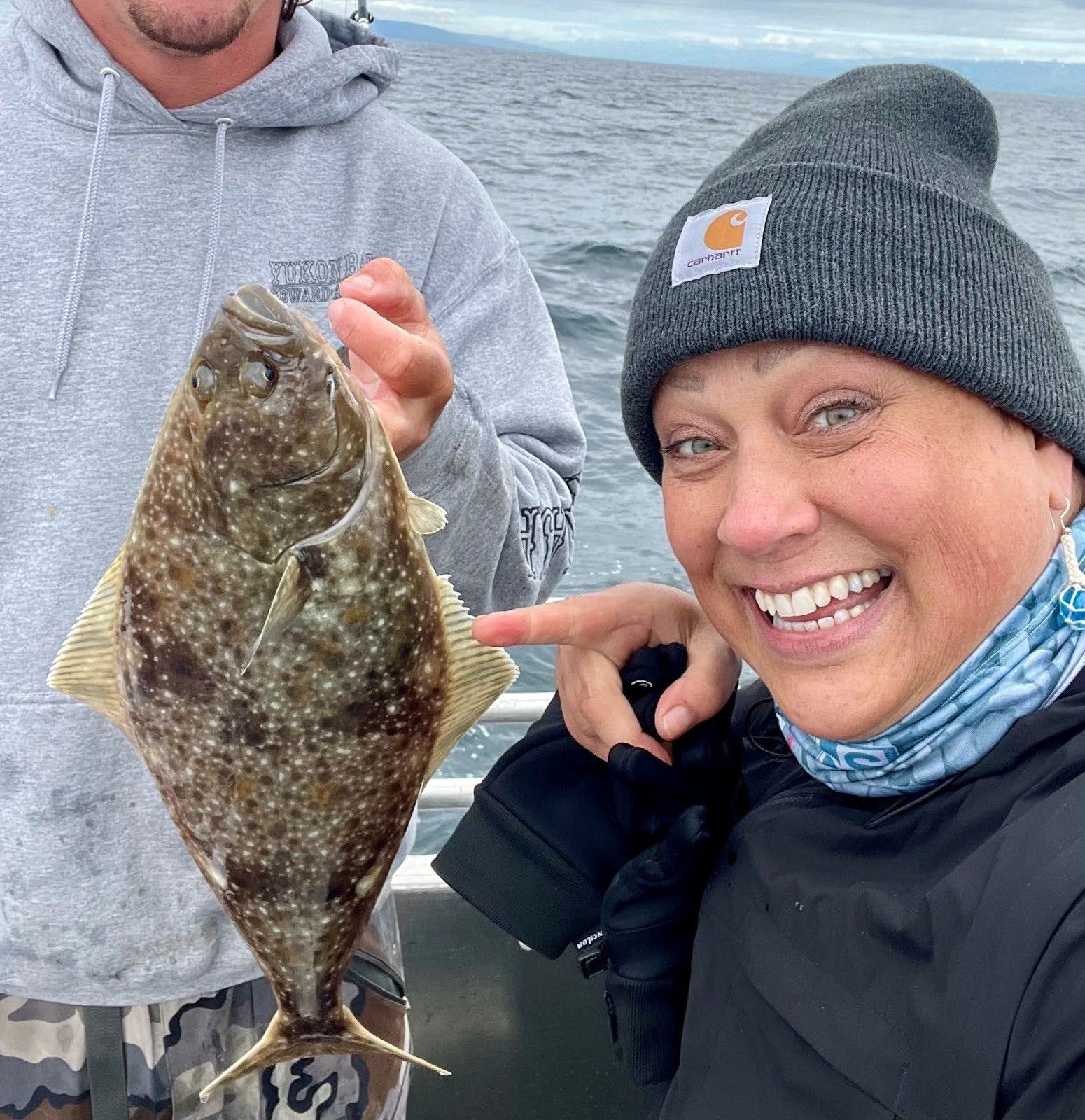
Nicole Hallingstad
Taylor Strelevitz • May 28, 2026
Last March, Nicole Hallingstad joined the Forum's Facilitating Through Conflict workshop. Nicole, who owns A&A Solutions, shared with the Forum's Director of Community Workshops & Facilitation Taylor Strelevitz about how the workshop resonated with her professionally, as she helps Alaskan organizations navigate change, and personally, as a person with strong cultural connections.
Nicole, can you tell me a little about your role and the kind of work you do in your community?
The mix of my two particular heritages really shaped my experience in the capacity for culture to create connection. My Tlingit grandmother Amy Yax Yeidí Hallingstad was a fierce Alaska Native rights champion for decades in our town, region, and later the state. My Norwegian grandmother Alma Nicholson Wallen was a founder of the Little Norway Festival for which Petersburg is well known. I grew up infused with the power that culture has on the sense of community.
I named my consulting firm A&A Solutions after my two grandmothers, Amy and Alma. They were both women ahead of their time and visionaries for the power of culture. The logo I designed for my firm is an A that includes a Tlingit formline element, and the second A that features a Norwegian swoop from their painting style called Rosemaling.
My grandmothers both passed before I was out of college, but they influence me to this day.
Both of my grandmothers knew the values, strength, and identity that come from our cultures. We are drawn together around our cultures to celebrate our traditions. This experience has shaped my career and how I support others to run their operations more effectively.
After working for separate employers throughout my career, I recognized that every organization is trying to solve three same fundamental issues: setting a strategic plan that reflects their values, aligning their business to best achieve that strategic plan, and measuring employee performance to hit the goals that fulfill their plan. It’s hard work to get all three pieces balanced.
I started A&A Solutions in 2018 to support many organizations, instead of one at a time, to align these three things. My work focuses on helping others manage change in the workplace well and operate effectively. I translate Alaska Native values like Respect, Balance, Harmony, and Sustainability into modern business principles and encourage companies to lean into this model to align their three things appropriately.
What kinds of conversations or meetings do you usually facilitate?
So much of my work is in supporting enterprises that need to make changes. Naturally, there can be resistance to change in the workplace, and feelings that arise like confusion, resentment, a loss of control, and even anger. I always work into these conversations the experiences that all of our ancestors faced, regardless of ethnicity, and the adaptability they had to have to succeed.
This is just as true in our modern systems. Talking about the universality of change, and helping people understand why it is happening, really softens some of the resistance.
I also host sessions where a business might want to have a better understanding of the basic Alaska Native organizational landscape in our state, to improve cultural awareness and understanding. This invitation assumes that there are groups of people who want to know more about the people they encounter and work with, and it’s really admirable for businesses to start from such a place of openness and honesty.
We’ll talk about Tribes and Native Corporations and different Consortia, their differences, and how they work together and with partners. I really love doing those sessions and sharing the depth of Native identity in our regions.
It’s not unusual for people to come up to me afterward and say they were embarrassed they didn’t really understand some of the distinctions or differences before. Being able to open hearts and minds to the brilliance, innovation, persistence, and structures of our sovereign Tribes and Native institutions is a real passion. When eyes light up with recognition or dots get connected, that is an exciting thing!
Nicole Hallingstad
What made you decide to attend the Facilitating Through Conflict workshop?
When the Alaska Humanities Forum advertised for their Facilitating Through Conflict workshop, I knew it would help me be a better convener and that it would be a huge benefit to learn how others have experienced and deal with conflict.
I loved being a part of this workshop! It was full of compassion, honesty, empathy, and support. Others in the workshop were solving the same problem, which always fills me with energy and desire to find solutions. How do we get people talking and working together who have differences that might seem unbridgeable?
The workshop hit all the pieces that I find helpful. It allowed for personal reflection, it taught strategies, we got to practice and roleplay to build comfort, we explored the power of shared agreements within any convening, and worked on real scenarios that held deeper meaning to the participants. And we left the day with materials and tools to help us keep building our understanding.
Are there tools from the workshop you’re planning to use?
The Facilitating Through Conflict workshop helps us to find the humanity and commonality with each other. I really connected to a comment made by AKHF that systems don’t create change, people create change.
The workshop inspired an exercise I now use to help people get to know each other better. It’s modeled on a common Alaska Native style of introducing yourself. We don’t stop at our own names, and we don’t include what we “do” because that doesn’t define us. We start with our names, and include our parents and our grandparents, our clans and social groups, and we acknowledge both sides of our families.
In my Tlingit culture, when we say our clan, others know the geographic region we are from, because our clans are tied to the lands in different places of Southeast Alaska.
The exercise I encourage is to introduce yourself, your parents and both sets of grandparents, where you are from, a key memory from childhood, and what you liked about your hometown. It inspires authenticity, vulnerability, and it sparks connections and overlapping experiences. I’ve seen it create a bond among participants that they’ve said never existed before, even among colleagues who have worked together for years.
Another tool was the Power of the Pause. Using a simple phrase like “Let’s pause for a minute” really helps slow down the discussion, especially if it has become heated. It allows for recognition of all sides of commentary, and let’s us dig a little deeper into why we say the things we do.
Thank you AKHF for igniting my own imagination about how to encourage connection that helps people get through difficult discussions!
Did anything in the workshop surprise you?
There was a short survey we took before the workshop, and everyone said their discomfort with facilitating conflict was high. But it was clear during the day that every participant had remarkable skills with how to convene and connect people. We tend to underestimate our own strengths and I love that the workshop shared the survey results and reminded us the power of what we already know.
Can you tell me about a time when a conversation you were facilitating became tense or difficult?
I was part of a cultural conversation between two communities who had a disagreement going back decades over something very precious to us, our lands. There was a slight made by one community that created hard feelings in the other. There are many cultural protocols about how to handle something like this, and I was present for this event.
There were some tough questions in the room. The bottom line was that an apology was due. I spoke on behalf of ancestors who had already passed when I offered a sincere apology from those who couldn’t be present to speak. It was clear that there were details and protocols I didn’t know, but I spoke from the heart.
That willingness to say “I don’t know if I’m doing this right, but it’s important to do it” helped shift the tension in that meeting. There was vulnerability and responsibility and duty present in the comment. The whole group from our community was a bit scared of saying the wrong things or not acknowledging the right steps, but we knew saying the words was necessary to move forward.
There were Elders in the discussion that recognized the effort, and they helped keep the conversation productive. Although I had been asked to facilitate, it was truly the spirit in the entire room that kept the conversation flowing. We need to rely on the help of others, and I was grateful for it.
What advice would you give someone facilitating a tough conversation for the first time?
Find a framework that you think works for you and for your audience. There are so many tools to support you and nobody has to just wing it. Then just be authentic!
There was a comment during Facilitating Through Conflict that facilitation is 90% Preparation and 10% when people are actually in the room. It was a brilliant observation! There is so much work you can do in advance to make a difficult convening successful, from knowing your audience to researching the issue to setting agreements for conduct to staying calm. I will keep that advice forever.
I also loved when someone said that “Facilitators are stewards of vibes”. Isn’t that great? It totally captures how we can be effective in a group setting. If we all pay more attention to our vibes, it can make a huge difference in how we work together to achieve the many goals we set for stronger, healthier communities.
For information on upcoming Forum workshops, visit https://www.akhf.org/events/
The Alaska Humanities Forum is a non-profit, non-partisan organization that designs and facilitates experiences to bridge distance and difference – programming that shares and preserves the stories of people and places across our vast state, and explores what it means to be Alaskan.
September 21, 2026 • Taylor Strelevitz
August 27, 2026 • Eiden Pospisil
July 24, 2026 • Annie Garay