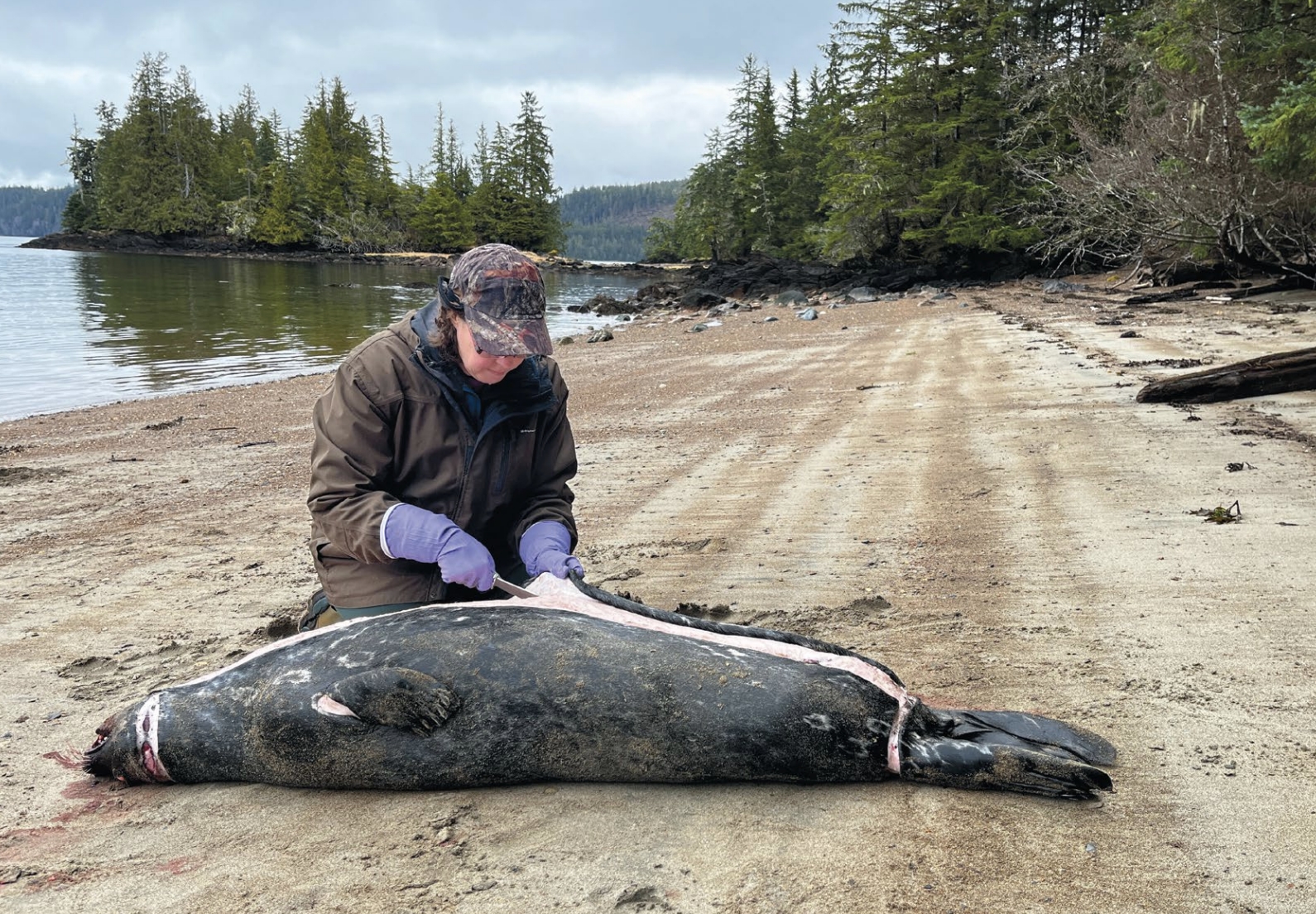
Christy Ruby skins a seal COURTESY OF CR DESIGNS
Christy Ruby skins a seal COURTESY OF CR DESIGNS
by Jennifer Nu
Summer 2022, FORUM Magazine
ON A CHILLY winter morning near Ketchikan, the steely sky melds into frigid sea. Most recreational boats are buttoned up for the season, but one 17-foot Crestliner is on the move. The captain is bundled in warm layers. An extra kicker motor is on-board in case the main engine fails. Safety equipment includes an emergency radio, medical supplies, extra clothes, and food rations for days. Christy Ruby is going hunting, and she’s ready for anything. “On a flat calm day, you can hear a seagull poop on the water, a mile away. It echoes. I am alone in the ocean,” she says.
Ruby is an Alaska Native hunter and award-winning fashion fur artist, specializing in seal and sea otter. Like her sense of humor, the custom apparel she designs and sews are all one-of-a kind. A Tlingit Eagle from the Kéet Gooshi Hít—the Killer Whale Dorsal Finhouse—Ruby is tough, tall, and does it all. She hunts and processes animals that provide her with meat, fur, and a fulfilling livelihood. Each piece she makes is fueled by hard work, grit, cultural pride, innovation, and creativity. “My work takes me back to my ancestral roots,” she explains. “Fur meant life or death to my people, and its value has not changed for thousands of years.”
Natural furs and skins provide superior protection and insulation from harsh Alaska winters. Her work reflects inspiration from iconic people and their stories, including her grandfather, a totem pole carver and Chilkat dancer from Klukwan. Ruby’s spectacular designs have won awards at fashion shows around the country, including the Santa Fe Indian Market and the Cherokee Art Market.
Hunting fur-bearing marine mammals for a living is tough work that requires experience, proper equipment to be out on the ocean, and a heavy emphasis on safety. Winter hunting carries increased risks of stormy seas and galeforce winds. “If it’s going to blow, I won’t go,” she says. “The tides must be perfect, and the weather must be moderate.”
Out on the water, Ruby boats over to her seal hunting spot, gets into position, and waits. One crack of a gun leads to many hours of work. She fetches the seal and brings it to shore to skin it, spreading the skin on the ground like a natural tarp as she works on the rest of the animal. Harbor seals are large, weighing well over 200 pounds and measuring four to six feet long. Rich black meat, slabs of pink blubber, hide, and knives go into buckets. Feeling accomplished and a bit chilled, she pulls anchor, and heads home.
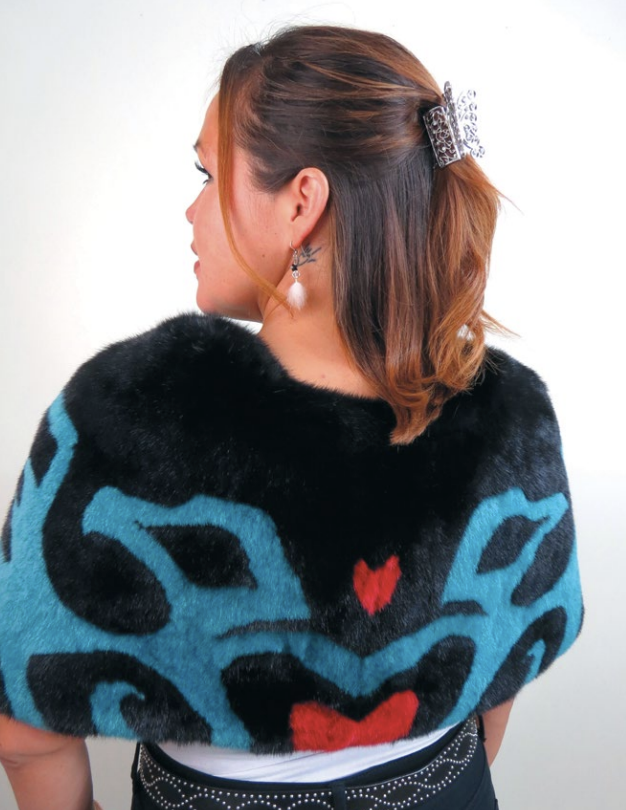
The stunning “Taboo Kusax’an” capelet showcases brilliant turquoise, red, and black otter fur in “lovebird” formline designed to honor Marianne, a childhood friend of Christy Ruby’s grandmother who transformed an experience of love lost into creativity and laughter. COURTESY OF CR DESIGNS
LIVING OFF THE BOUNTIFUL LAND AND WATERS OF SOUTHEAST ALASKA
Being self-sufficient with food is important for Ruby. She grows a large vegetable garden and raises a batch of meat birds each summer. She also keeps a flock of egg chickens, cuddly pets trained to do tricks for treats. A former fly-fishing guide and lifelong deer hunter, she has the skills to keep her freezer stocked with a mix of wild and cultivated food from the land and sea. “I believe that the hard work that goes into hunting, raising, and processing your animals makes it taste so much better,” she says.
Ruby learned respect for animals as soon as she started hunting. “I shot a squirrel when I was 15. And I had to eat that squirrel,” she said. “My grandmother told me, ‘You shoot it, you eat it.’ Well, our pine squirrels here are yucky. So, I didn’t shoot any more.” Fortunately, the harbor seals that Ruby hunts are a delicious, nutritious food that have long been harvested by the Indigenous peoples of Southeast Alaska. “They have the finest grained livers, which don’t even taste like fish,” says Ruby. “It’s smoother than goose paté. It’s ocean-flavored liver.” Her favorite part is the backstrap, fresh and roasted over a campfire. “The meat is rich in iron and Omega-3s.” Seal blubber is highly prized and traditionally rendered into oil. “If he’s been eating squid, I’ll render the blubber and use it as deicer for my body. I add a few teaspoons of seal oil to a bowl of oatmeal before I hunt because it’s bone-chilling cold out there.” While the air temperatures hover between 20-30 degrees Fahrenheit, the wind chill in an open boat can get down to minus 20 degrees. “Seal oil is the time-tested remedy to keep a person warm in the cold,” says Ruby. “But if you eat too much, ya might get a little loosey goosey!”
Seal blubber and oil is also a traditional and contemporary external heat source, which makes all the difference in freezing winter weather. “You can use the fat on a fire, doubling the output of BTUs,” she adds. When she first started hunting seal, Ruby shared the meat and blubber with Elders. Since many of the Elders she knew have passed away, pieces of seal are given to anyone who requests some.
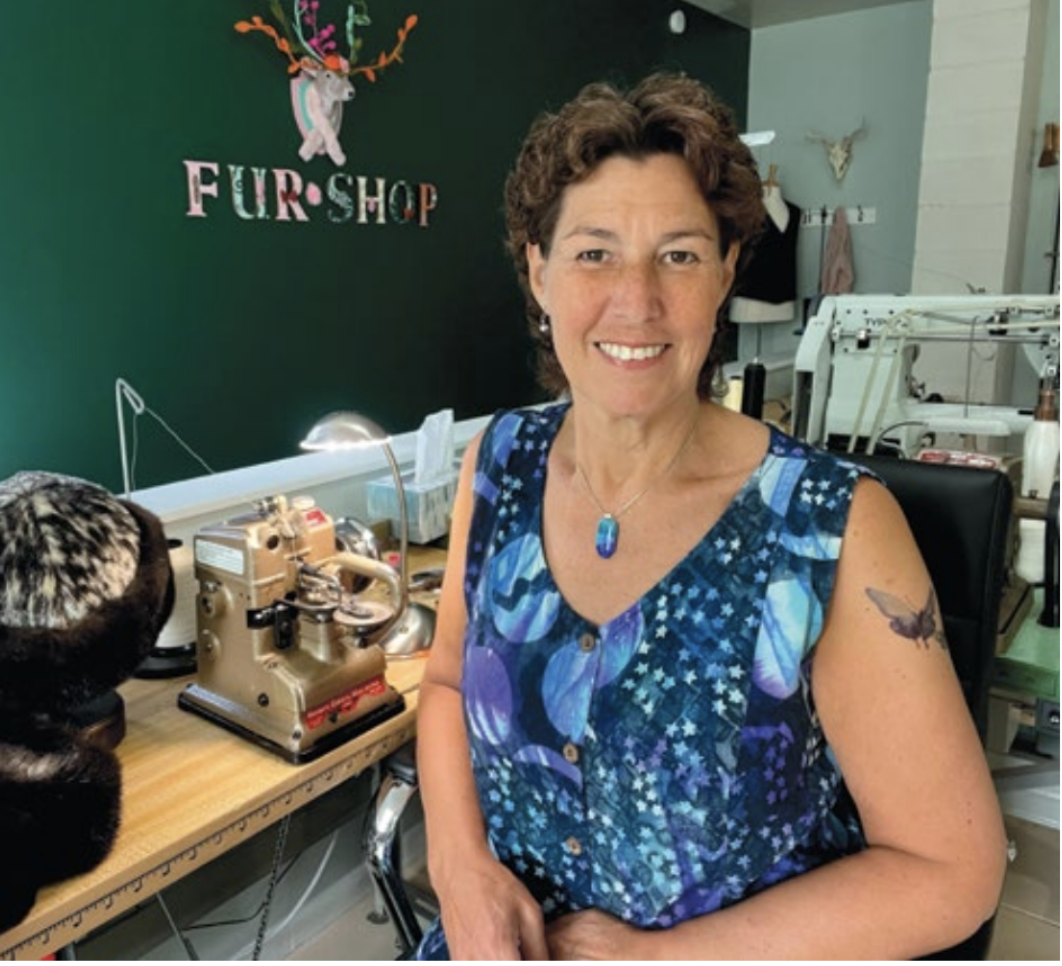
Christy Ruby in her studio in Ketchikan. COURTESY OF CR DESIGNS
SEAL AS THE OUTER SHELL
For hats, mittens, and other apparel, sealskin serves as an outer shell. “Nature’s waterproof material—it breathes and repels water and is impenetrable against the elements,” Ruby explains. “Seal has natural oils in its skin that you can never get out. Its durability factor can last 40 years.”
Ruby started hunting seals because she wanted to make sealskin mocassins for her mother. To purchase sealskin was expensive. “So, Idecided to try hunting. It’s a lot of physical work, but it’s not difficult,” she says. “I went out and just did it.” Already a deer hunter, Ruby taught herself the rest. After returning home, Ruby removes all the blubber and meat from the seal hide during the laborious step called fleshing. The hides are preserved with salt before the critical stage of tanning, which is specialized cleaning and processing to ensure long-term preservation of the skin and fur. Unfortunately, tanning garment-quality sealskin in the United States is nearly impossible. While some tanneries do tan sealskin, Ruby has the highest standards for the skins of the animals she hunts. “I’m picky when it comes to my fur,” she says. “I’ve sent my hides to some tanneries, and they came back ruined.”
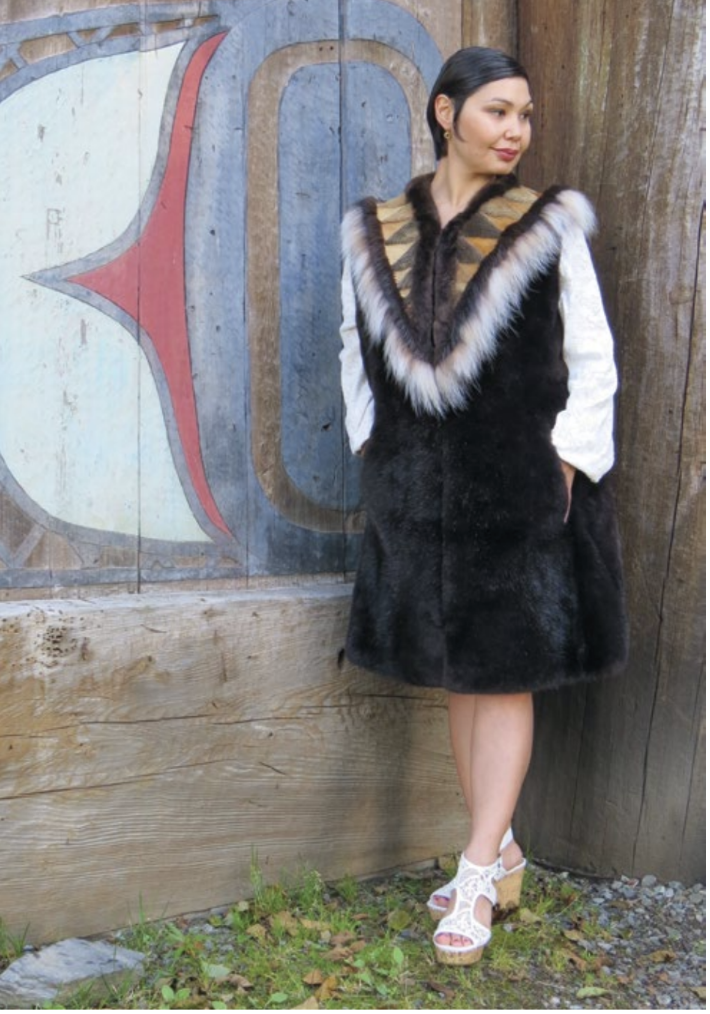
A dress featuring a collar of 72 individual Alaska fur pieces. COURTESY OF CR DESIGNS
Ruby entrusted her sealskins to only one tannery. “My favorite tanner, Ralph Ring at Frontier Tanning, was the best seal tanner in Alaska. He tanned for 65 years.” With affection she calls him “My favorite grumpy Mr. Rogers.” He trained Ruby in the commercial aspects of seal tanning. “He would not train anybody, he was so grumpy,” Ruby remembers. “It took me two years of begging him to train me and he finally did.” For three weeks, they tanned hides in tandem. “He tanned 30, and I tanned 30.”
After she returned home, Ring called her on the phone. “He called me up to see what I was doing,” she says, remembering her disbelief. “He actually missed me. He never had anybody work with him in the tannery before.” Ruby misses him, too. In winter 2021, Ring passed away at the age of 92 and the loss is still hard to fathom. “Now where will I get my seals tanned?” she wonders. Determined to find a way forward, Ruby says that Ring’s knowledge did not die with him. “Someday, I’d like to train a worthy person to do the job that he did.”
“Someday, I’d like to train a worthy person to do the job that he did.”
SEA OTTER AS THE INNER SHELL
After starting with seal, Ruby began hunting sea otter with the help and encouragement of several mentors. The densest fur in the world, sea otter’s insulative properties make it the perfect inner shell to complement a sealskin outer shell for Ruby’s fur apparel. Both seals and sea otters are protected by the 1972 Marine Mammal Protection Act (MMPA), which allows hunting only by Alaska Native hunters for the purpose of eating the meat and creating or selling authentic native handicrafts. Similar to sealskin, Ruby also prizes the relationship she has with her sea otter tannery. Since 2017, she has experimented with developing techniques for dyeing colored sea otter fur with Tubari, Ltd. in New Jersey. Together, they perfected the process, making it possible to showcase colored sea otter fur in her award-winning designs and custom products.
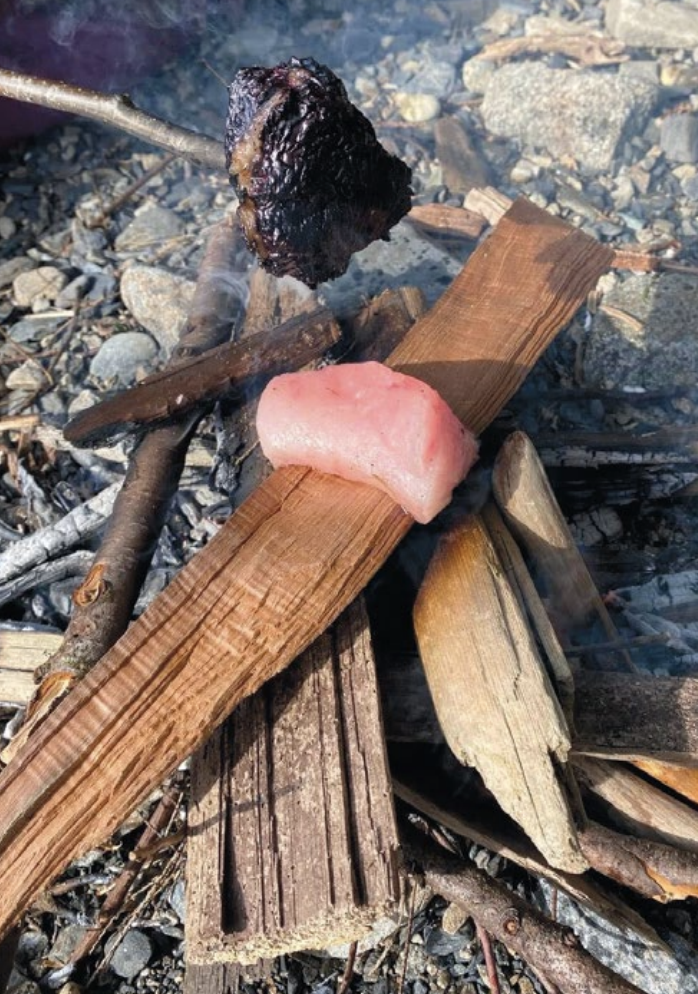
Seal meat and blubber are best enjoyed over a camp fire, according to Ruby. COURTESY OF CR DESIGNS
INSPIRED DESIGN AND FUR SEWING
Before fur, Ruby was a graphic commercial artist for 30 years, drawing and sculpting intricate designs on collectible coins produced by a private mint in Alaska. A lifetime of artistry and creativity continues in the form of functional fur art apparel. “This is where Christy Ruby shines,” praises Curtis Brown, a long-time customer and geoduck diver in Craig. “She’s involved in the whole process, from shooting, fleshing, sending it in, and then making something absolutely beautiful.”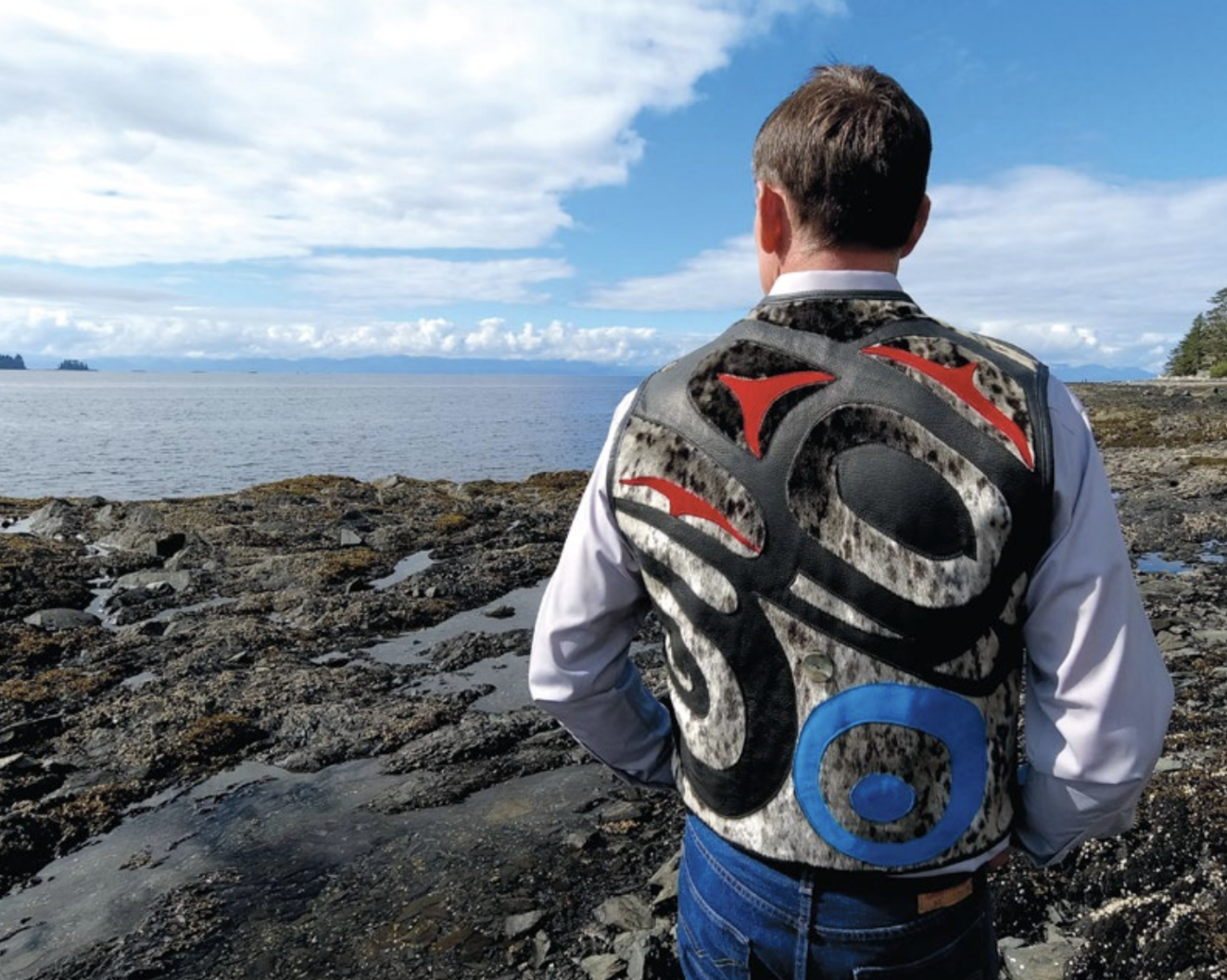
The “September Seal” vest pieces together formline sealskin with colorful deerskin leather into a garment of mesmerizing perfection. COURTESY OF CR DESIGN
Jennifer Nu is a freelance writer and photographer in Alaska who explores stories about people and community well-being. When not writing, she can be found backcountry trekking, packrafting, and harvesting and processing traditional foods.
FORUM is a publication of the Alaska Humanities Forum. FORUM aims to increase public understanding of and participation in the humanities. The views expressed by contributors are not necessarily those of the editorial staff or the Alaska Humanities Forum.
The Alaska Humanities Forum is a non-profit, non-partisan organization that designs and facilitates experiences to bridge distance and difference – programming that shares and preserves the stories of people and places across our vast state, and explores what it means to be Alaskan.

October 19, 2026 • Adam Mackie
September 21, 2026 • Taylor Strelevitz
August 27, 2026 • Eiden Pospisil