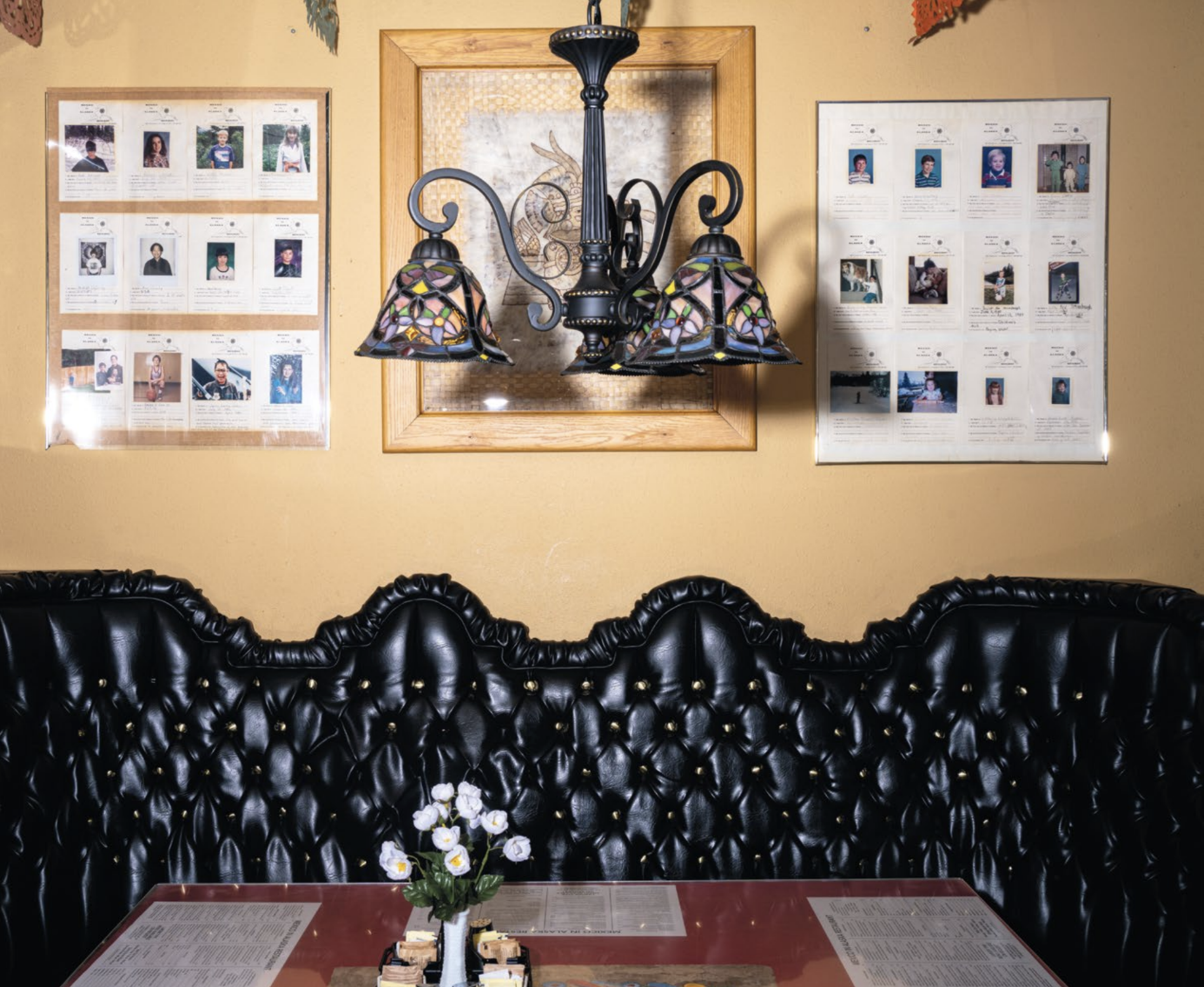
Certificates on a wall at Mexico in Alaska commemorate childrens’ first visits to the restaurant, and favorite foods. PHOTO BY ASH ADAMS
Certificates on a wall at Mexico in Alaska commemorate childrens’ first visits to the restaurant, and favorite foods. PHOTO BY ASH ADAMS
by Gabriela Olmos
Summer 2022, FORUM Magazine
FULL BELLY, HAPPY HEART,” is an old Mexican saying. Although pithy, it is not always accurate. Not everything that reaches our bellies nourishes our hearts.
If asked what flavors gladden our souls, we would all give different answers. But many of us would talk about the flavors from our childhood. Our early memories of smells and tastes are powerful because they connect us with that space we recognize as home and make us feel safe.
When immigrants depart their countries of origin, they leave behind the possibility of connecting with those memories. Their new home will receive them with novel dishes, and those who cook will have different ingredients at hand. But they will hardly find the flavors from their early days.
Immigrants to the United States may be surprised to find a wide variety of restaurants serving ethnic cuisines in their new country. But a restaurant needs more than familiar names on the menu to become a meaningful space. It should feel a little like home.
Today, Mexicans craving tacos in Anchorage may choose from more than 50 restaurants when looking for that homey place. The city has a robust Mexican community, and tacos are ubiquitous. But this has not always been the case.
Mexicans first arrived in Alaska toward the end of the 19th century during the gold rush. Anthropologist Sara Komarnisky found an immigration document for a Mexican living in Alaska that dates to the1910s. But not every job was golden. Mexicans worked in fishing and canning companies as early as 1905, and many served on military bases during World War II.
The next wave of Hispanic immigrants would arrive shortly after the 1964 earthquake when Alaska needed workers with construction experience. In the years that followed, many of them sent for their families.
“Introducing Mexican food to the Last Frontier involved significant challenges.”
However, the most significant numbers of Mexican immigrants would arrive in the 1970s during the construction of the Trans-Alaska Pipeline. Mostly, they found jobs in restaurants or retail stores.
Although Mexican communities in Alaska were growing larger, few were fortunate enough to have the flavors of home at hand. But the opening of the Taco Loco tortilla shop was a step in the right direction.
Originally from Durango, Mexico, Adán Galindo faced challenges typical of Alaska when he bought Taco Loco in 1976. Galindo told an Anchorage Daily News reporter in 1995 that the cost of getting corn dough to this corner of the world was so high that it was impossible to offer tortillas at the same price as shops in the Lower 48. But he was determined to bring Mexico’s flavors to his fellow Mexicans and found a way.
The first restaurants to serve Mexican food in Anchorage were LaMex, La Cabaña, and Mexico in Alaska. Gallos, Taco King, Burrito King, Chepos, Xalos, and Las Margaritas came later.
Introducing Mexican food to the Last Frontier involved significant challenges: not only sourcing the ingredients but also educating Alaskans’ palates, fighting for menus to be written in Spanish, and training cadres of workers to understand the nuances of Mexican gastronomy.
Talking about Mexican restaurants leads us to a couple of questions: What exactly is real Mexican food? Who decides if a dish is “authentically” Mexican or not, and on what basis?
Authentic Mexican food is as varied as Mexico is vast. Mexico is 33 percent larger than Alaska. The 14th largest country in the world, it covers nearly 800,000 square miles of forests, jungles, mangroves, deserts, grasslands, and urban areas. Locally grown ingredients are not the same in a mountain forest as in a tropical jungle; culinary methods vary from region to region, too. Mexico’s geographic diversity has given rise to a great variety of traditional dishes that do not always resemble each other.
“The foods of a country do not, by themselves, compose a cuisine. Cuisines, when seen from the perspective of people who care about the foods, are never the foods of a country, but the foods of a place,” wrote food anthropologist Sidney Mintz. Mexican immigrants in Anchorage would agree. Like everyone else, they have emotional connections with the smells and tastes of a specific regional gastronomy and not necessarily of what came to be considered Mexico’s national cuisine.
How do Mexican restaurants in Anchorage address the emotional connections of diners to regional foods? To answer this question, let’s talk about dishes from different regions that became part of Anchorage’s Mexican dining experience.

Maria Elena, owner of Mexico in Alaska, works at her desk in her office in the restaurant. PHOTO BY ASH ADAMS
PEOPLE LOVE BURRITOS TO THE MOON AND BACK
The word “burrito” in Spanish means “little donkey.” The name is enigmatic to many, who see no connection between a burrito and the beast of burden.
Journalist Antonio Moreno Montero collected three stories about the origin of the name. They all agree that, during the Mexican Revolution, cooks and street vendors transported burritos on donkeys throughout northern Mexico. Soldiers in the Revolution used to say, “here comes the burrito,” and their mouths watered, knowing they could soon knock down their hunger with a massive flavor bomb.
Burritos are ubiquitous in the United States but are not common in all of Mexico. They are traditional staples in the northern state of Chihuahua, where eating wheat flour tortillas has been customary since the 17th century. The rest of the country leans toward corn tortillas and often disdain flour tortillas as impostors in the taco world, but that’s another story.
Burritos became a popular dish in northern Mexico and the southwestern United States in the mid-20th century. Despite being well-liked by Hispanics on both sides of the border, they gained wider recognition due to American fast-food franchises, which usually were not handled by Latinos.
As they spread to every corner of the United States, burritos transformed, adapting to local tastes. The creativity of Mexican chefs in Anchorage led to the creation of halibut burritos with tartar sauce and the party of traditional ingredients.
But burritos have gone farther than Alaska. Astronaut Danny Rivas transformed them yet again when he prepared zero-gravity burritos on the International Space Station in the 2000s.
“Who decides if a dish is 'authentically' Mexican or not, and on what basis?”
MOLE IS THE MEXICAN LOYALTY TEST
Mole (pronounced moh-lay) is one of Mexico’s most traditional dishes. It is so popular among Mexicans that the prominent writer Alfonso Reyes used to say that “refusing to eat mole [in Mexico] can almost be considered treason against the country.”
Mole is a thick sauce made from nuts, peppers, spices, and sometimes chocolate. It can have more than a dozen ingredients—sometimes many more—and Mexicans usually enjoy it on top of turkey or chicken. Cooks may also serve it in a dish similar to enchiladas, often called enmoladas.
“Mole is Mexico’s quintessential dish. Mexicans serve mole to celebrate baptisms, weddings, birthdays... you name it!” said María Elena Ball, the owner of Mexico in Alaska.
Experts credit the invention of mole to Sister Andrea de la Asunción, a nun from the Santa Rosa convent, in the city of Puebla, in central Mexico. Legend has it that Sister Andrea had to cook an exceptional dish for a distinguished guest of the convent, perhaps the viceroy or a bishop. We’ll never know if she felt pressed for time or was inspired by the ingredients, but Sister Andrea mixed everything she found in her kitchen and created a sauce that people now enjoy—nay, worship—throughout central and southern Mexico.
María Elena introduced mole to the state in the 1970s. When she opened her restaurant in 1972, she served dishes that were already familiar to Alaskans. But she wanted to treat diners to the smells and flavors of Mexican homes. The task was not easy: her mother shipped her peppers and other ingredients impossible to find in Alaska.
María Elena remembers when she asked a guest if she knew of mole poblano (from the Puebla region). The woman firmly assured her that she knew what Mexican food was. But when served enmoladas, the customer took offense, insisting that it was not a Mexican dish. María Elena later discovered that the diner was from Texas and had confused Tex-Mex cuisine with Mexican, as often happens.
But María Elena did not give up, and she still offers mole enchiladas to diners who want to discover the flavors of 17th-century Mexico.

Mexico in Alaska PHOTO BY ASH ADAMS
TREATING THE LIVING AND THE ANCESTORS TO COCHINITA PIBIL
Cochinita pibil (pronounced coach-ee-neat-ah pea-beal) is a traditional dish from the southeastern Mexican state of Yucatan. Anchorage restaurants have recently added it to their menus.
Commonly prepared with pork, cochinita pibil is meat marinated in a sauce of bitter orange juice, achiote paste (from annatto seeds), garlic, onion, and other spices. Once the meat has been infused with the flavor of this mix, cooks wrap it in banana leaves, and bake it in a pit oven with hot stones, called “pib” in Mayan. Cochinita pibil gets its name from this oven. Mexicans serve cochinita pibil with slices of purple onions and habanero chili bits pickled in the juice of a bitter orange.
Cochinita pibil owes its existence to the hybridization of cultures that occurred in the Yucatan peninsula during the Spanish colonization. Achiote has been a part of the region’s gastronomy since pre-Hispanic times. Mayans used to bake venison in pib ovens. After the arrival of the Conquistadors, pigs replaced the local game in pibil, giving the dish its syncretic flavor.
Mayas usually place cochinita pibil on their altars for the Hanal Pixan, as the Day of the Dead is known on the Yucatan peninsula. They also include handmade corn tortillas in their ofrendas, hoping the ancestors would treat themselves to the most delicious tacos.
Diners can enjoy cochinita pibil tacos in Anchorage as well. Ollin Tea & Cafe serves them on Tuesdays and Thursdays. Alex Marqueda, Ollin’s owner and chef, said he introduced the dish because “Americans were not acquainted with it and Mexicans missed it.”
Marqueda prepares cochinita pibil in the traditional way but has to forego the pib oven. “We cannot dig an oven on the restaurant floor,” he said. Marqueda steams the meat instead but still uses banana leaves and all the traditional spices to cook his pibil.
The United States is a land of immigrants, where the flavors of regional cuisines mix in unexpected combinations. Xalos Burrito Express, for example, serves cochinita pibil burritos, which wrap flour tortillas from northern Mexico around Mayan ingredients.
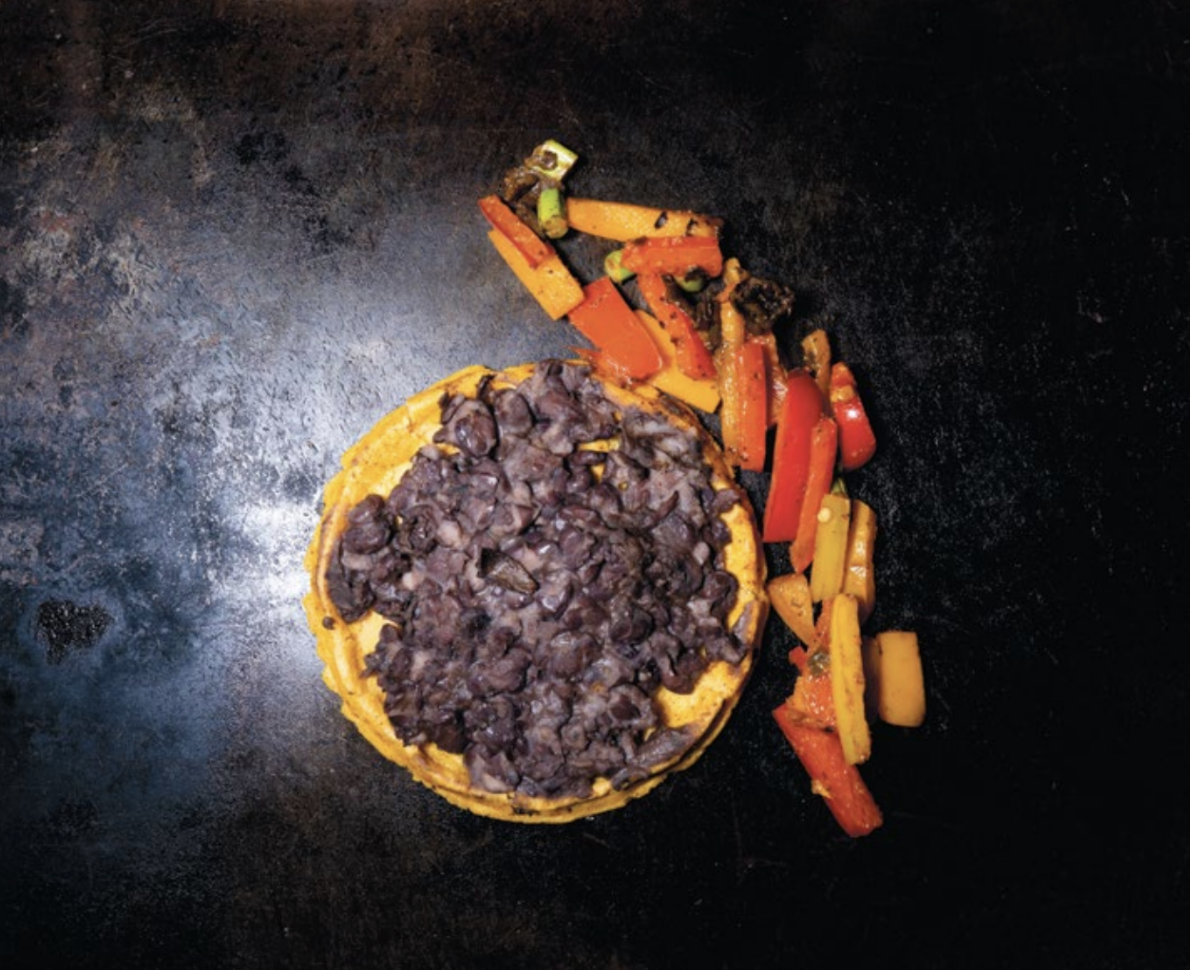
Ollin Tea and Cafe PHOTO BY ASH ADAMS
MEXICAN RICE GOT CAUGHT IN A MISUNDERSTANDING
Mexicans from the central states traditionally accompany their main dishes with beans and red rice, usually prepared with Morelos-type rice. It has a long grain, but not as long as that of the Basmati variety. Morelos rice is rich in starch and has a spongy texture that absorbs flavors
easily.
To prepare red rice, Mexicans generally fry it with onions. Then they pour in natural tomato sauce, water, and spices and cook it over low heat. Some people add carrot chunks and peas while the rice is simmering.
Making a bowl of good red rice is a rite of passage in Mexican culture. The recipe sounds easy, but getting the fluffy texture of red rice is difficult, and by tradition, those who manage to do it for the first time are told they can now marry. Red rice is also traditional among Hispanics living in the southwestern U.S., where it is mistakenly called “Spanish rice.”
The recipe book El cocinero español (The Spanish Cook), published in 1898, was responsible for the misunderstanding. In El cocinero español, the California-born author En carnación Pinedo republished hundreds of recipes from the Nuevo cocinero mexicano (New Mexican Cook), a recipe book cherished by dozens of Mexican families.
Despite presenting Mexican recipes, El cocinero español’s title claimed European origin. Experts have pointed out that Pinedo could have chosen this title to avoid racial discrimination, which was already a problem the Mexican American community faced in the 19th century.
In Alaska, María Elena Ball has tried to straighten out this confusion. In her restaurant, red rice is called “Mexican rice.”
“Someday, I’d like to train a worthy person to do the job that he did.”
SALSA ROJA OR SALSA VERDE IS THE ONLY DIVISION THAT MATTERS
When the country is politically divided, Mexicans may say that the only division that matters is the one that separates those who prefer salsa roja (red) from those who lean toward salsa verde (green). Fortunately, there are many more salsa options in Anchorage’s Mexican restaurants, even more than in high-end restaurants in Mexico. The salsa bar is more of a taqueria tradition.
Beyond the salsa bar, there are other significant differences between restaurants and taquerias. While restaurants open at noon, serve lunch and dinner, and provide a place to sit, taquerias tend to be more rustic, specializing in tacos, operating in the evenings, and closing after 2:00 a.m. In Mexico, young people may end a night out by enjoying tacos with salsa roja, verde, or any other. But whichever they choose, the salsa must be very hot because they believe spicy food cures a hangover.
Eating Mexican in Anchorage is an intense experience beyond how spicy the salsas are. Here, restaurants serve dishes from different regions and culinary traditions that one rarely finds in one place in Mexico. Anchor age’s restaurateurs also serve dishes that are unique to Alaska.
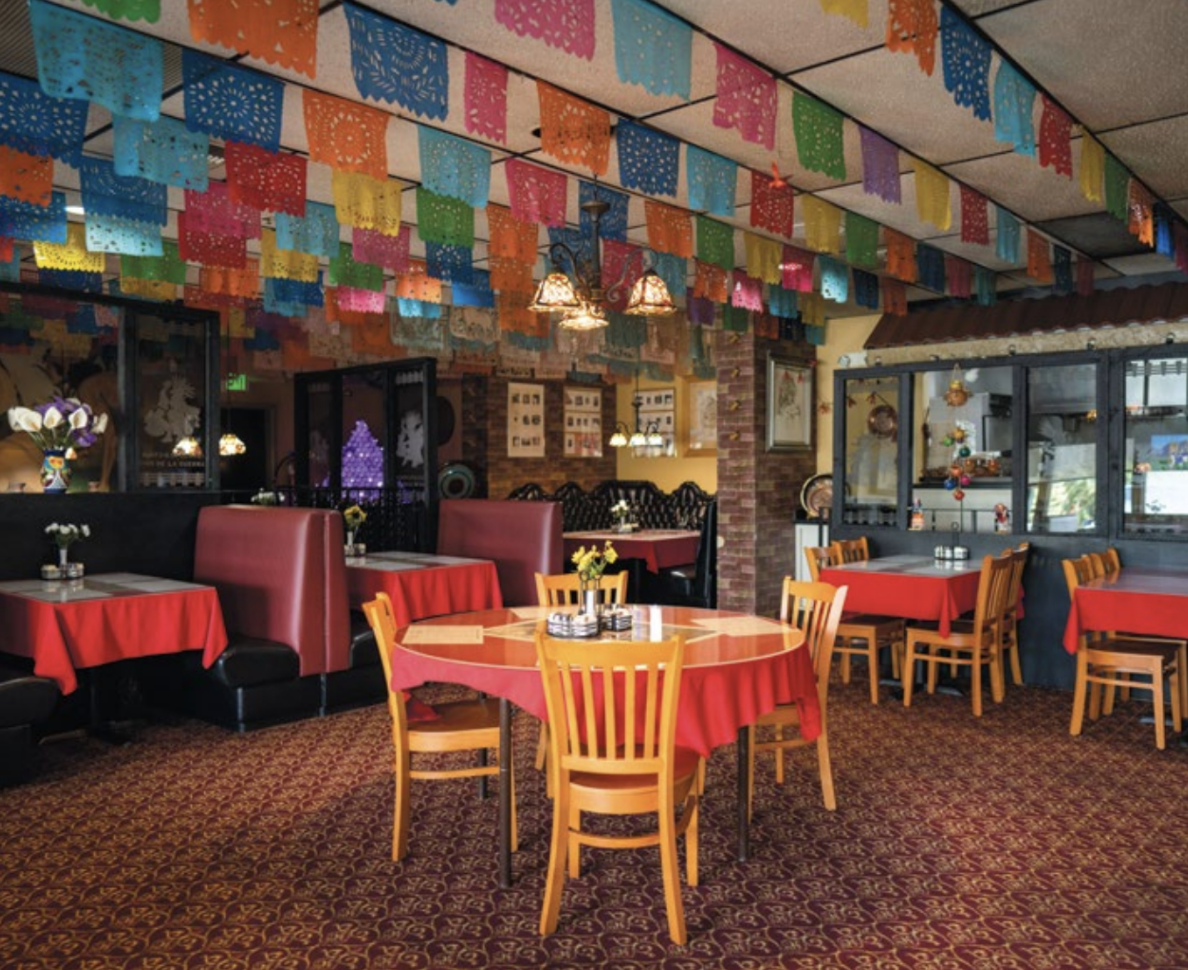
Mexico in Alaska PHOTO BY ASH ADAMS
With regionally diverse menus, Anchorage restaurants remind Mexican patrons of their country and the flavors of their childhood.
“We migrants miss our flavors, and more so being so far away, here in Alaska,” said Alex Marqueda.
But Mexican restaurants do more than delight their guests with the dishes they ate back home.
“My clients are to me like an extended family. They see in this place more than a restaurant. They come when they feel bad, when they have a problem, and when they have something huge to celebrate,” said María Elena Ball, who all but literally asks her customers to make themselves at home.
“Mi casa es tu casa,” meaning my house is your house, is much more than a Mexican welcoming message. It is a sincere gesture of radical hospitality from hosts who will not—who cannot rest until their guests feel comfortable, loved, and happy.
And so, Anchorage’s Mexican restaurants strive to make their customers feel welcome while filling their bellies. But they do much more than that. They also provide a space where a community of diners, despite any differences, may nourish their hearts, feel safe, and probably smile. ■
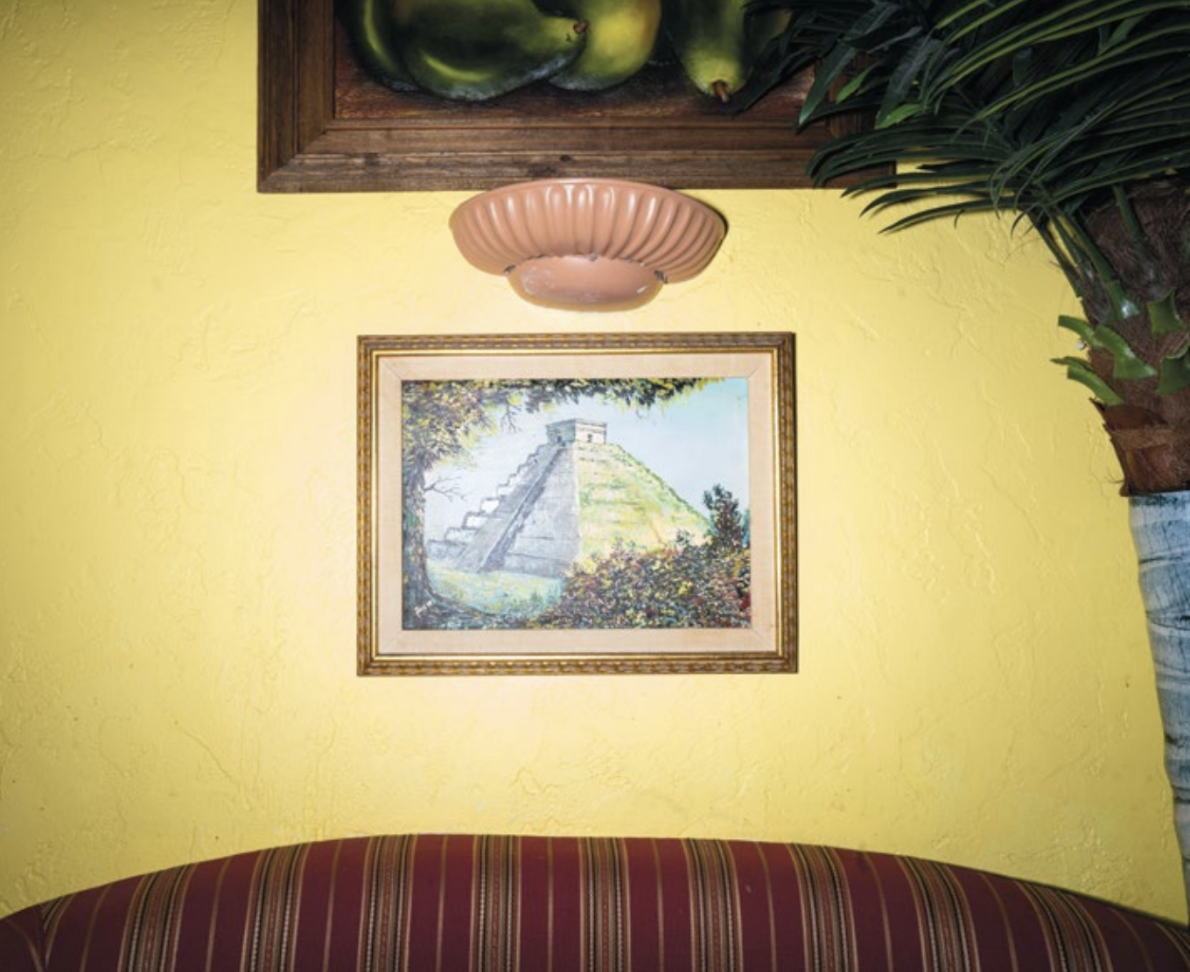
La Cabana PHOTO BY ASH ADAMS
FORUM is a publication of the Alaska Humanities Forum. FORUM aims to increase public understanding of and participation in the humanities. The views expressed by contributors are not necessarily those of the editorial staff or the Alaska Humanities Forum.
The Alaska Humanities Forum is a non-profit, non-partisan organization that designs and facilitates experiences to bridge distance and difference – programming that shares and preserves the stories of people and places across our vast state, and explores what it means to be Alaskan.

October 19, 2026 • Adam Mackie
September 21, 2026 • Taylor Strelevitz
August 27, 2026 • Eiden Pospisil