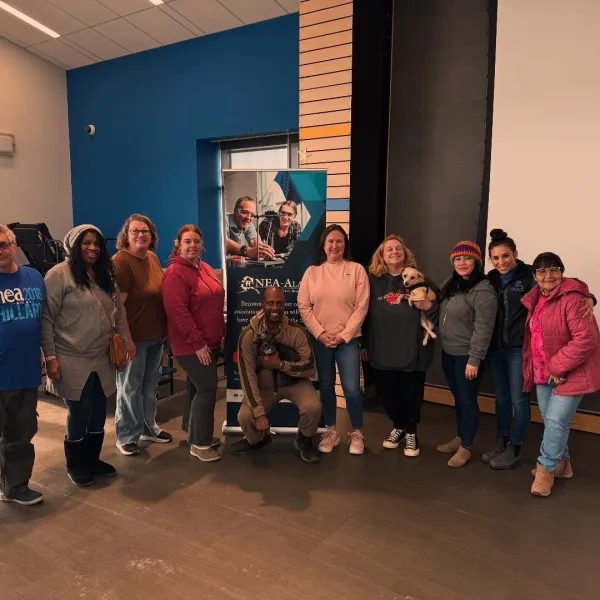
Jennel Hartman and colleagues
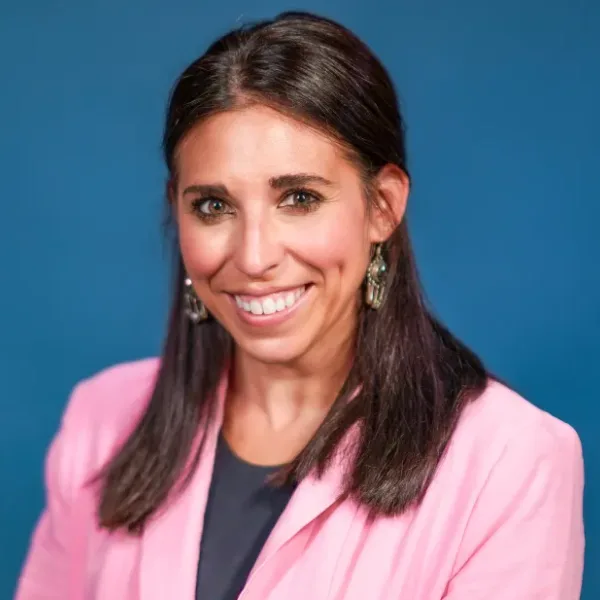
Jennel Hartman
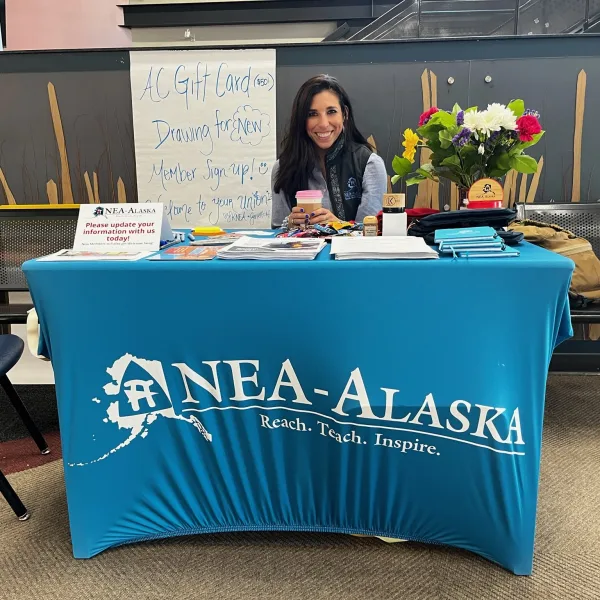
Jennel Hartman
Polly Carr • April 5, 2026
In October 2025, Forum program staff facilitated two workshops for a group of educators across Alaska. These workshops – Seeing Your Own Lens and Story of Self and Us – helped the group develop more culturally aware perspectives and opened up stories about their values and calling. After this experience, I sat down with Jenell Hartman, the coordinator of the workshops and a former teacher, to learn more about her journey and hear her reflections on culture, community, and education.
Tell me about your education career, and how it led you to where you are today. Why did you choose to do what you do?
When I was a kiddo, I would play “teacher” with my sister - and I always thought I’d be one. Over the years, my career path veered into other areas, but in 2017 I was seeking a career change and had two interviews: one with Delta Airlines and one with Teach for America. I said whomever calls me first will be the job I pursue, and it happened to be Teach for America. I was ‘placed’ in Nampa, Idaho for two years, getting my emergency certification in teaching, while dually enrolled in Boise State University to pursue a Masters of Education. When the COVID pandemic hit late into my second year of teaching, I decided to go back to Alaska and teach in the school district I graduated from, Anchorage School District. Ultimately, I became an elementary Health teacher that worked at Northwood, Kincaid, Campbell Elementary and Denali Montessori.
When I was teaching in Idaho, I had to accept the very first job I was offered and ended up being placed at a public charter school that did not have union representation. I had a deep understanding of the labor movement and how important that was for workers, so to be in a school without that representation was challenging. For example, there was uneven teacher compensation, we were asked to work many hours over a “typical” student contact hour workday, and were required to work at least two weekends a school year. I did a lot of community outreach and activities which felt rewarding, and volunteered with efforts to support people in marginalized communities. Upon returning to Anchorage, I remember being elated to sign my union membership. I was employed with the Anchorage School District for four years, but after experiencing continued years of education funding cuts, threats to cutting Health education and an increased interest in my union work, I left education to become a UniServ Director for NEA-Alaska, shifting my profession into advocating for teachers and educational support staff full time.
What resonated with you the most about the Seeing Your Own Lens Workshop and the Story of Self and Us Workshop?
When I first read the Forum’s description of the workshops, it brought me back to my days as a teacher, because they include the individual, organization, and system lenses and how these things are connected, and help you think about what difference you can make in each of these areas.
Thinking about who you are as a human being and where you are coming from, in a safe way, was a powerful way to begin the day. We were able to be vulnerable and also self-reflective. You cannot be a teacher if you cannot be self-reflective; because if you are teaching kids a lesson, and it doesn't go well, but you are unable to reflect on why, the kids you’re teaching are not going to have a good experience or a quality education.
I think the Seeing Your Own Lens workshop is so important, because educators are working with diverse populations– especially in Anchorage! There are so many different cultures and backgrounds. To be a culturally responsive teacher, you have to know where you are coming from, and where your students are coming from. You have to be sure you are mindful of what your students are aware of and going through, as they may not know the identities, perspectives, cultures, or approaches of others.
Regarding the Story of Self and Us workshop, I believe every teacher should know the why to what you are doing; what you are doing; and what is your role in the community you are working in and serving. Knowing where you are coming from and who you are is so important, because it’s going to follow you into the classroom; if you don’t have that foundation before you enter the classroom and meet your students, it will be a challenge. Knowing your “why” is so important. Teachers are there because they care about teaching.
Why do you think these types of workshops are important for educators, and people working in education?
These two workshops combine well to help you understand why you are getting up everyday and going into a classroom where students may have different challenges. So you have to really know why you’re giving your all to your students. This is especially true for our transient teachers coming into rural Alaska. Our districts are always preparing people for the job they are going to have and the communities in which they will be teaching and living.
We have a teacher in the Lower Kuskokwim School District who went through the Forum’s Cross-Cultural Competence (C3) program who speaks so highly of it, and every teacher I know who has gone through that program has spoken about how it prepares them for engaging with community and understanding dynamics in which they are working and living; and building some understanding of different cultures and their own cultural lenses they are bringing to their work. Preparing our teachers for that is going to make their experience that much more valuable– their own journey and career, and the experience of their students. We want to keep good teachers, and the C3 program can help with that.
What do you think is special or unique about the Forum’s workshops?
The Alaska Humanities Forum workshops are focused on connecting with community. I attend workshops out of curiosity - I love to listen and learn about other peoples’ experiences. Having an opportunity to come to various Forum events and listen to people in the community, and have a conversation, is so valuable.
I went to the 36 Questions for Civic Love that the Forum hosts; these types of experiences are not generally occurring in the public. I’m not generally going to engage with someone I don’t know and have these really vulnerable conversations. But the Forum is able to create those safe spaces for listening and talking and sharing experiences. I actually did the 36 Questions with my husband after we attended and had different Forum partners; and we both got so much out of it asking these questions to each other as well.
Jenell Hartman is the UniServ Director for the National Education Association-Alaska, in which she supports several locales around the state in rights, bargaining and organizing its members.
*******************************************************************************
If you would like to Work With Us in hosting a community-building workshop for your team, organization, or network, please fill out this form or contact Polly Carr, pcarr@akhf.org. If you would like more information about the Forum’s Cross-Cultural Competence (C3) program, please contact Julie Rowland, jrowland@akhf.org.
The Alaska Humanities Forum is a non-profit, non-partisan organization that designs and facilitates experiences to bridge distance and difference – programming that shares and preserves the stories of people and places across our vast state, and explores what it means to be Alaskan.
September 21, 2026 • Taylor Strelevitz
August 27, 2026 • Eiden Pospisil
July 24, 2026 • Annie Garay