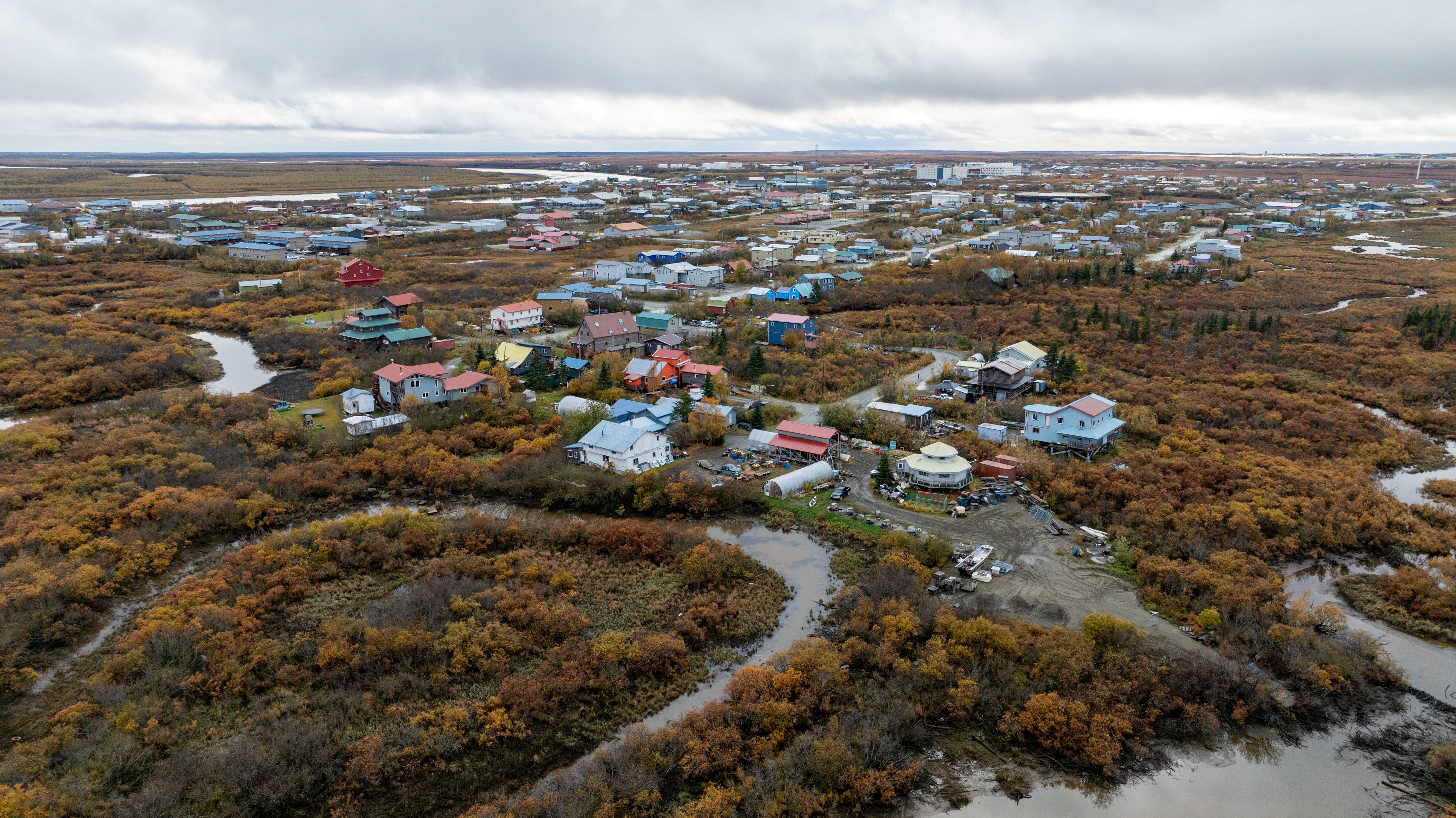
Brown’s Slough winds around the Bethel neighborhood known as Alligator Acres. Fall 2025. Photo by Katie Baldwin Basile.
Brown’s Slough winds around the Bethel neighborhood known as Alligator Acres. Fall 2025. Photo by Katie Baldwin Basile.
Edited and Abbreviated Interview with Fran Reich, Recorded April 2, 2025
By Katie Baldwin Basile
Katie Basile: FRAN, WILL YOU START BY INTRODUCING YOURSELF?
Fran Reich: I go by Fran, but my real name is Francis Reich. I moved to Bethel in 1974 to take a job with the Bureau of Indian Affairs. I brought my wife and two daughters up from Florida, and we arrived long before the subdivisions and development that came later.
Finding the Land
Katie: There wasn’t much housing available then. How did you end up finding this spot and deciding to build?
Fran: In the beginning, there was no city planning function. Life was pretty hard — you had to be ambitious to make it comfortable — and it helped that I had small children when I arrived, and I wanted desperately to have a place for them. I was just overwhelmed with this urge to build a community that could encompass a whole lot of people who liked each other and enjoyed a way of life. And that vision was a powerful vision.
I started digging through old Moravian and recorder’s office records and found these large tracts of land down here, land most people thought was no good because it flooded. I was here for the 1975 and ’76 floods, floods that were considered to be historically high. I canoed all over this area during the floods, and I located this particular spot where I could pull the canoe up and stand and just look at water everywhere. And so over time, I realized there's good land there.
Trying to ascertain who owned the land was a story unto itself. I hired a private detective in Anchorage to track down the man who owned much of it — Albert Schmidt. It took him two weeks, but the detective found him in Southern California.
I was a young man not knowing how to approach a fellow who owns a big bunch of land down here, all of it considered flood plain and swamp. But to me the idea was overpowering.
When I finally got Albert on the phone, he told me his wife was in surgery, and he didn’t know how he would pay for it. Without thinking I said, “I’ll pay for your wife’s surgery in exchange for the land.” And I remember him being thankful, but also crying because he had solved one problem and he had grown very distant from this land. In the end it turned out to be fair for both of us. Albert signed over huge tracts of land — including the land we’re sitting on right now.
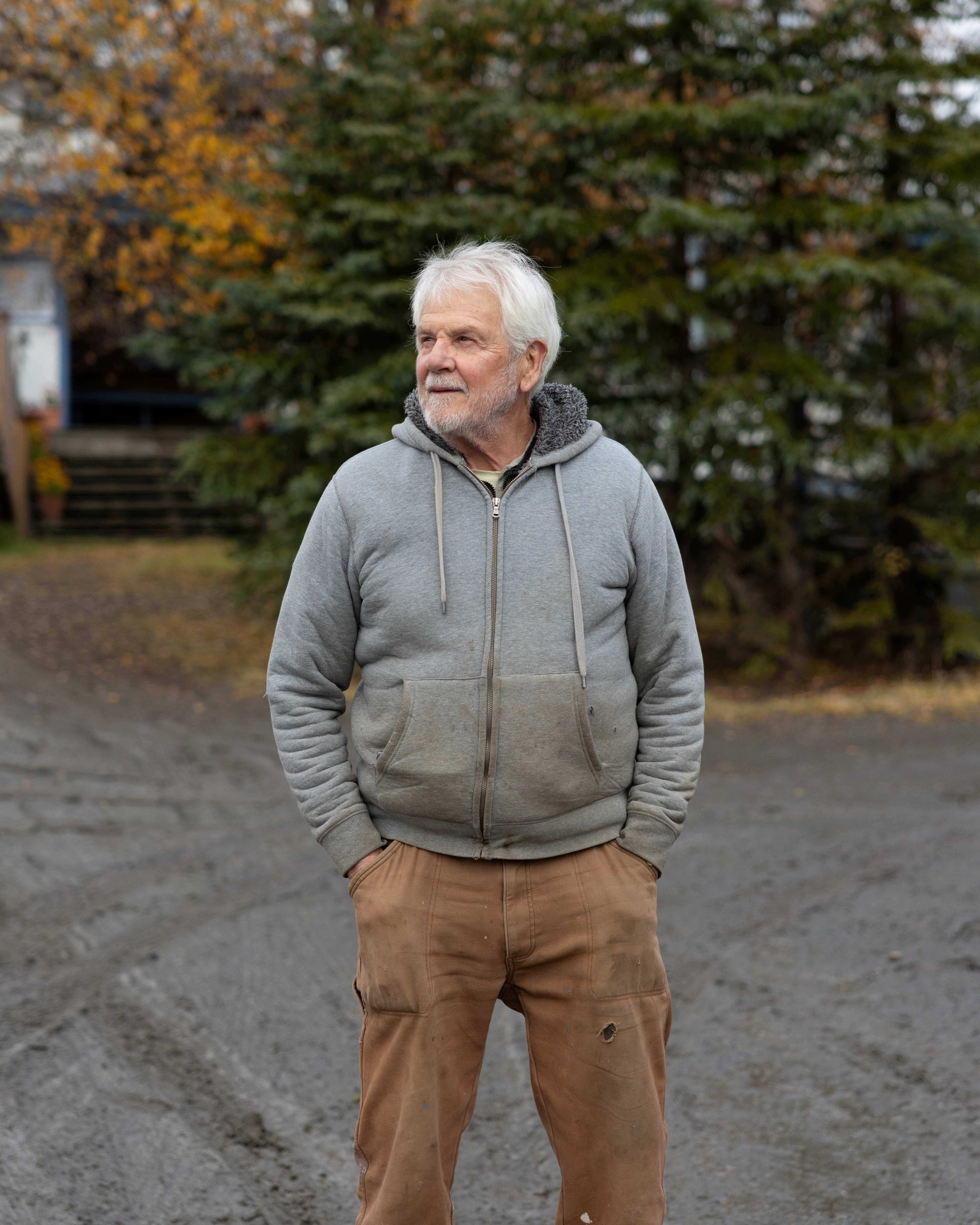
Fran Reich stands outside of his home in Alligator Acres, a neighborhood in Bethel, Alaska he settled and subdivided in the late 1970s. Photo by Katie Baldwin Basile.
Building a Neighborhood
Katie: And then you had to actually make this neighborhood happen.
Fran: That’s right. The big challenge was getting roads and fill. I went down to Jimmy Hoffman at United Transportation — they were the only game in town for dirt. I told him about my idea for roads.
Jimmy had piercing blue eyes, he was a dapper guy, and his son Mike was standing beside him. And I remember him looking at me with those blue eyes piercing through me like I was full of it, but apparently, he was persuaded enough to take a chance.
At that time there was a big lake where Sixth Avenue comes in. People used to dump honey buckets right off the edge of the road. Bernard Cheney was dumping dirt and dumping dirt, but it just disappeared into the lake. And Jimmy says, we’ve got to do something about that, because at this rate, you're going to dump thousands of loads of dirt and you're not going to get anywhere. We had to pump it out. I borrowed the city’s new fire pump, ran a hose into the lake, and carved a creek to drain it. Could you do that today? No, but there was no city planners.
So, we drained the lake, and then Jimmy told me it'd be far better if you get some stuff to fill in there. So we'd go to the dump, and we haul refrigerators and stoves, I mean, old, dilapidated stuff. And Bernard Cheney just kept burying it. And pretty soon, as you can see by the pictures, Sixth Avenue came right down through that lake.
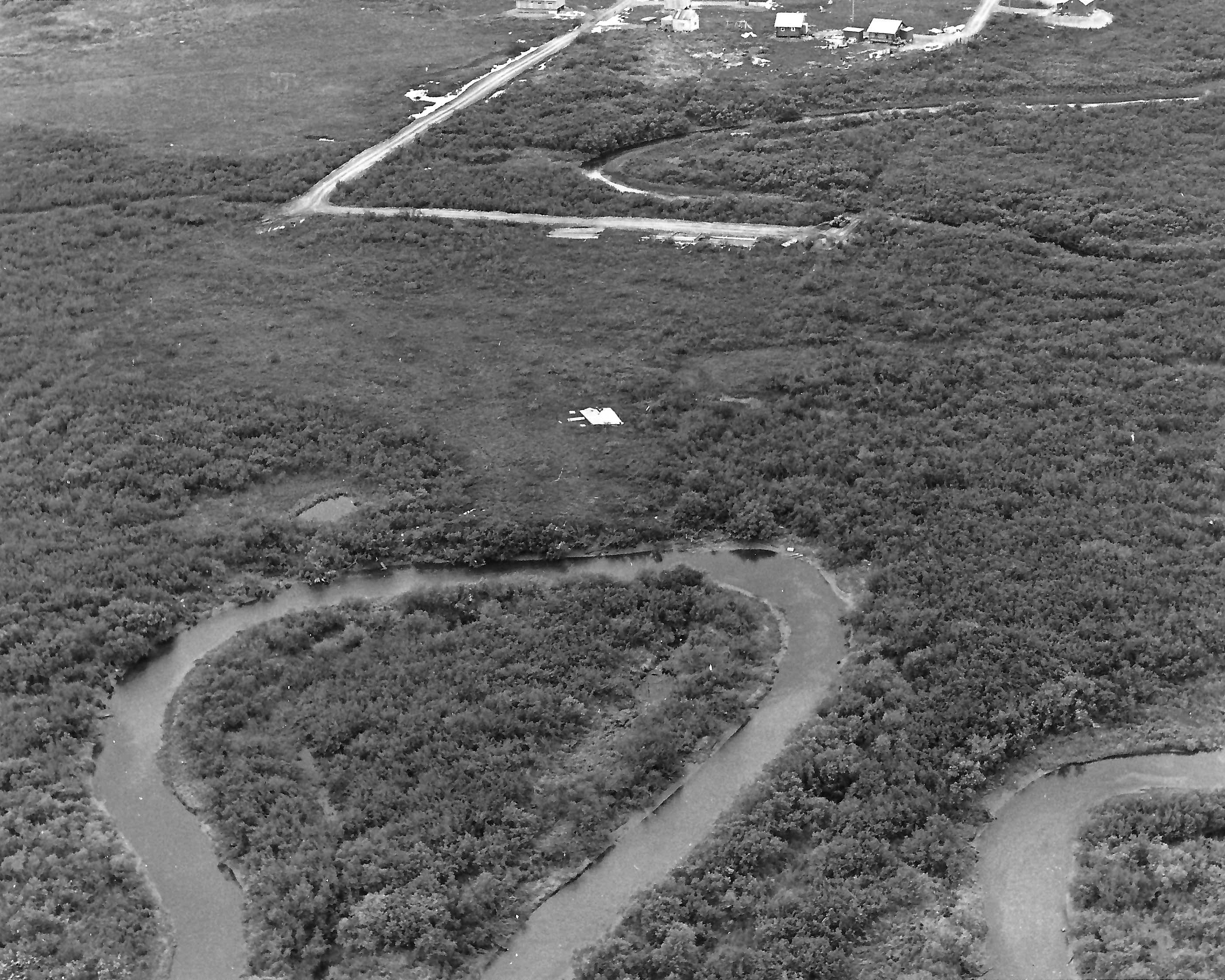
An aerial photograph of the land that would eventually become the Bethel neighborhood known as Alligator Acres. Courtesty of Fran Reich.
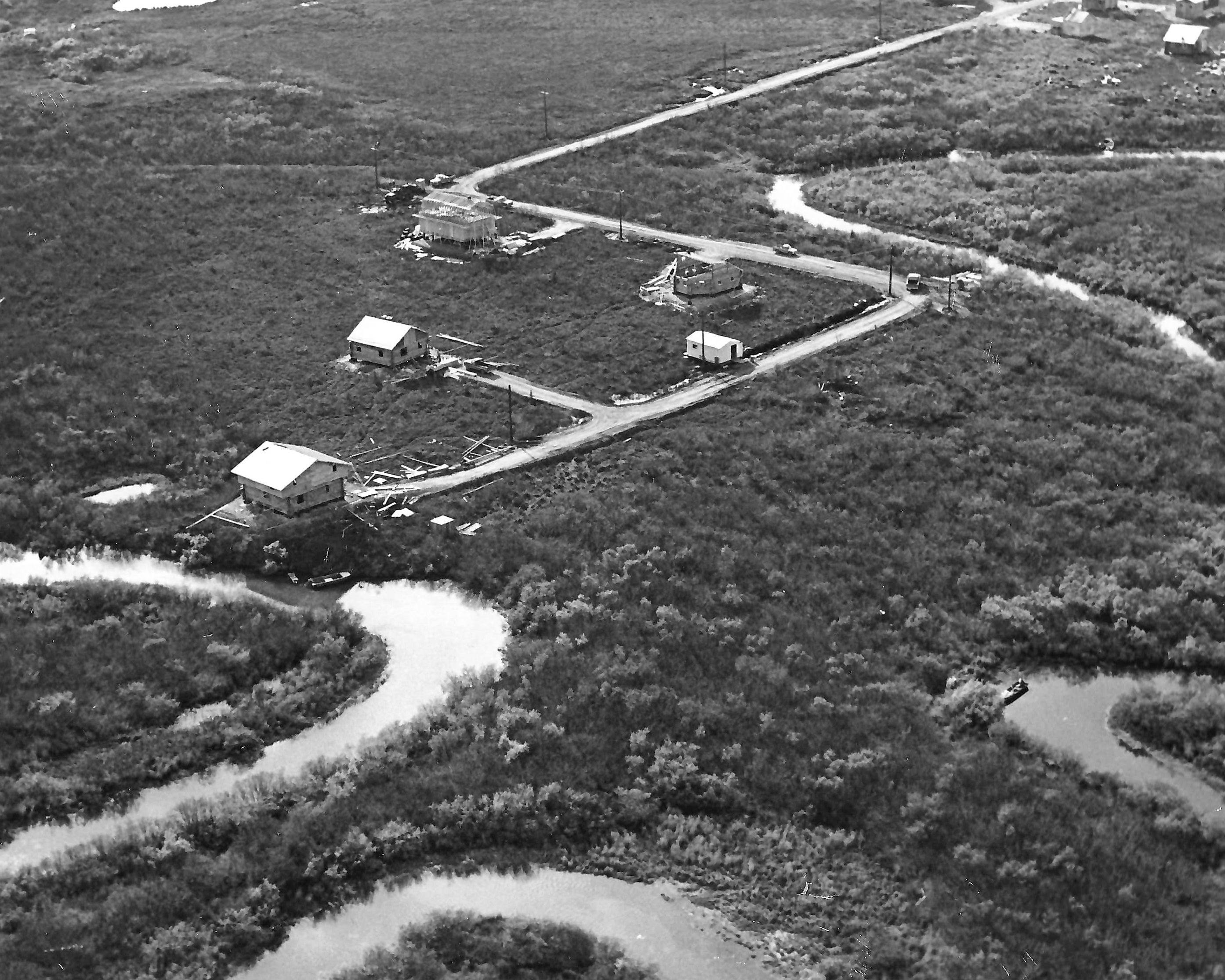
An aerial photograph of in-progress construction of Alligator Acres. Courtesty of Fran Reich.
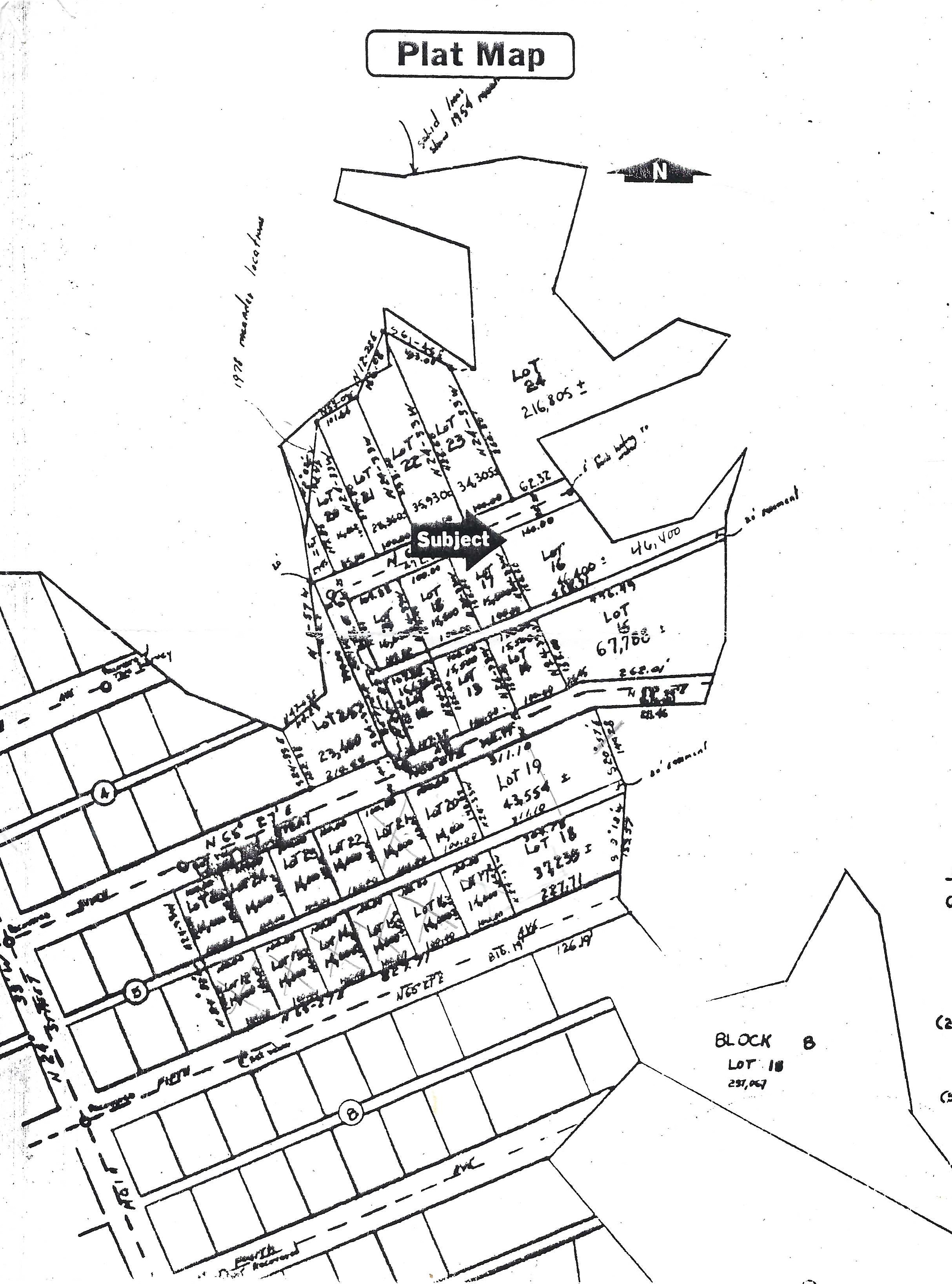
An early plat map of Alligator Acres. Courtest of City of Bethel via Fran Reich.
Why “Alligator Acres”?
Katie: Where did the name Alligator Acres come from?
Fran: How did that name come about? Oh, that's a tragic but a real story. It’s officially called Reich Subdivision on maps, but Alligator Acres caught on, just like all the little nicknames that catch on in our society here.
I was in the process of developing the subdivision, and the roads had just become sophisticated enough that you could get down through them with two-wheel drive vehicles. Up until that point, it had been a mud hole to get in here.
At the same time, I was working for the college. There were some big changes happening between the industrial arts and practical programs versus the academic side. My position got reorganized, and I was tasked with disbanding a shop program that had a lot of wonderful people who lost jobs.
The crew of men I fired — I didn’t know they did this at the time — went into the shop, took a sheet of plywood, cut out the silhouette of an alligator, painted it green, and put it at the head of Sixth Avenue with a big sign: Welcome to Alligator Acres.
Someone took a picture of the sign, and they ran it in the local paper, The Tundra Drums.
I wasn’t about to take it down. It stuck. People started painting dumpsters with alligators, cab drivers called it Alligator Acres. And so, it became the name.
The Dream
Katie: What was your vision when you started all this?
Fran: I had two very young daughters, and I had this old-fashioned concept of swing sets and children playing and a pristine environment for kids to be raised. But when I look back, it was a fantasy that I had, not knowing, how slow development can be. I was deluding myself to think that you could move into a raw area and turn it into a neighborhood quickly. It’s taken a lot longer than I really wished it had.
Katie: Are there moments when you’ve seen that vision fulfilled?
Fran: One thing that sticks in my mind is how many people have come, raised their children, had a life, had jobs, paid taxes. It’s a curse, but a blessing to have that kind of historic knowledge about all the houses that have been turned so many times. And you think, boy, this is an economic engine. And when I look at the energy, that vitality, I get a good feeling from that. ■
Katie Baldwin Basile is a documentary photographer and multimedia storyteller from Bethel, Alaska. She lives in Alligator Acres with her family.
FORUM is a publication of the Alaska Humanities Forum. FORUM aims to increase public understanding of and participation in the humanities. The views expressed by contributors are not necessarily those of the editorial staff or the Alaska Humanities Forum.
The Alaska Humanities Forum is a non-profit, non-partisan organization that designs and facilitates experiences to bridge distance and difference – programming that shares and preserves the stories of people and places across our vast state, and explores what it means to be Alaskan.

October 19, 2026 • Adam Mackie
September 21, 2026 • Taylor Strelevitz
August 27, 2026 • Eiden Pospisil