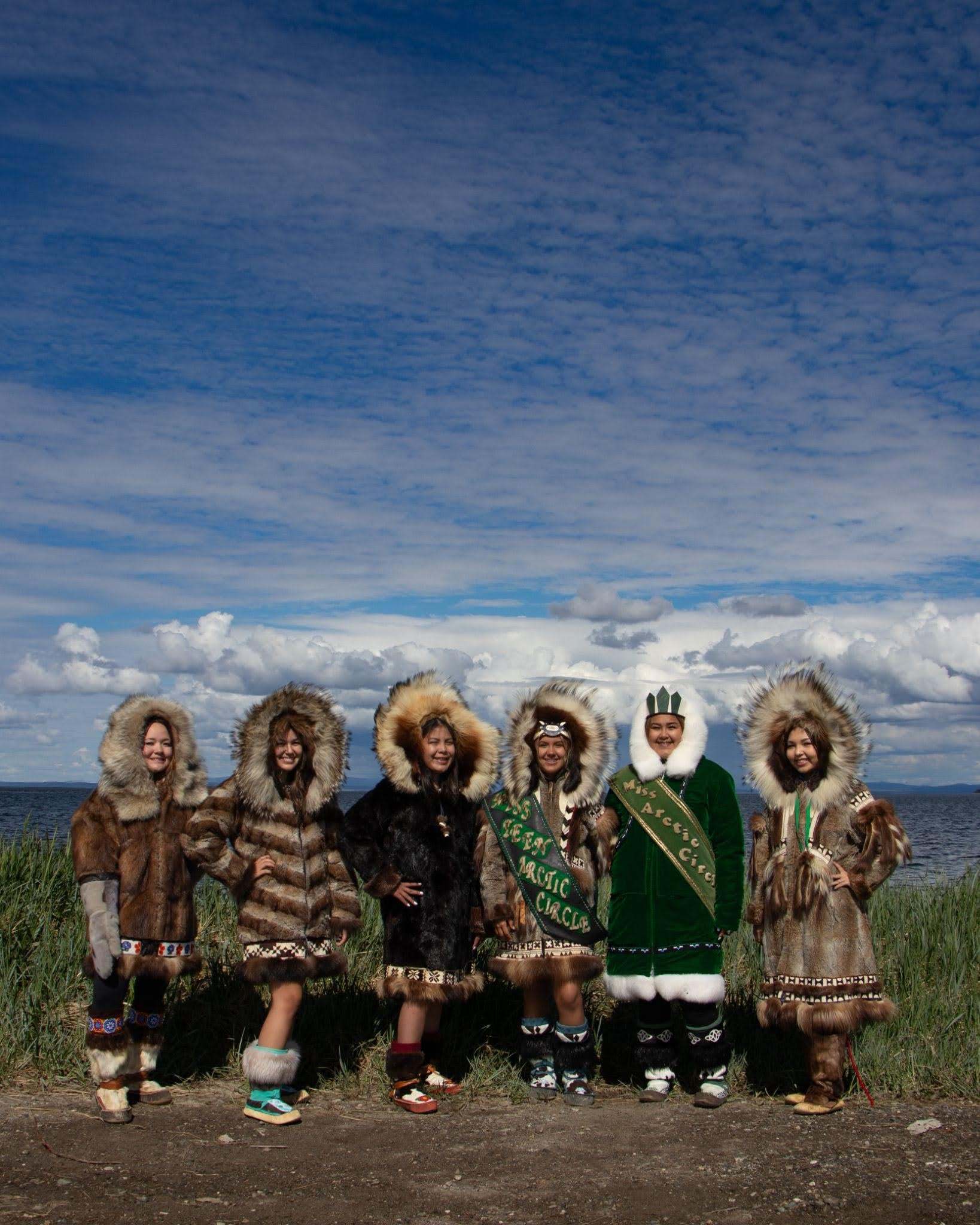
The 2026 Miss Arctic Circle & Miss Teen Arctic Circle contestants, with reigning Miss Teen Arctic Circle Qannik Naomi Nordlum and Miss Arctic Circle Amalik Siearrah Thomas. Photo by Macy Rae Kenworthy.
The 2026 Miss Arctic Circle & Miss Teen Arctic Circle contestants, with reigning Miss Teen Arctic Circle Qannik Naomi Nordlum and Miss Arctic Circle Amalik Siearrah Thomas. Photo by Macy Rae Kenworthy.
By Macy Rae Kenworthy
Spring 2026, FORUM Magazine
I CAN'T IMAGINE what it was like back then, in 1950, when the first Miss Arctic Circle was crowned in Kotzebue, Alaska. I expect the women then had the same nerves as I did when I was crowned in 2017. Standing on stage in front of your community, knowing people are paying attention not only to what you say but to how you carry yourself, feels vulnerable, no matter the generation.
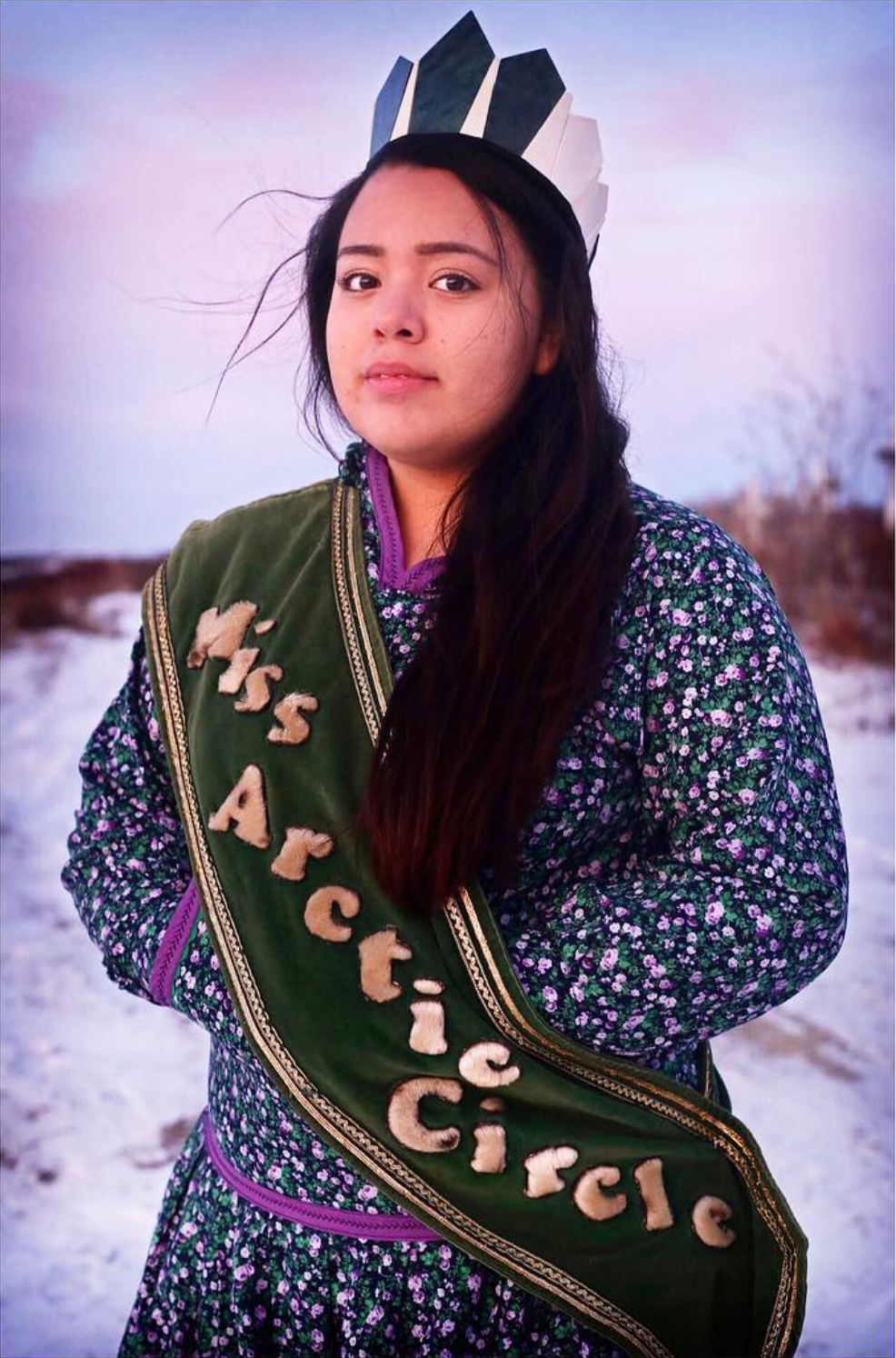
2017 Miss Arctic Circle Kikiktagruk Aŋnuk Macy Rae Kenworthy. Photo by Emily Mesner.
Growing up in the Northwest Arctic, Miss Arctic Circle was always bigger than just a pageant. Every July 4th, people from across the region gathered in Kotzebue to celebrate. Families filled the school cafeteria and fairgrounds to watch contestants represent their villages, families, and communities through talent presentations, showing of traditional regalia, and public speaking. Some contestants grew up in the region, while others were descendants of families from the Northwest Arctic Borough who had since moved away. Even then, they still returned home to compete, reconnect, and represent where their families came from.
As a kid, I mostly noticed the visible parts of the pageant: the girls in fur parkas, the crowns, the atikłuk (traditional woman's dress), and kammak (also known as maklaks). For some contestants, it may even be the first time wearing certain pieces of traditional regalia. I watched young women answer questions in front of entire communities and perform talents that reflected pieces of who they were and where they came from. But the older I got, the more I realized the pageant was also about cultural knowledge, storytelling, and representation. Contestants were expected to speak about Native issues, share pieces of Iñupiaq culture, and carry themselves in a way that reflected both confidence and respect for the communities they represented.
Over the decades, generations of young women have stepped onto that stage carrying different experiences, different strengths, and different understandings of what it means to be an Iñupiaq woman during their time.
By the time I competed in 2017, the pageant had already existed for nearly seventy years. I was told that during its earlier years, Miss Arctic Circle was chosen by audience cheers at the 4th of July community events in Kotzebue. It eventually was adapted to mirror the judged events of the Miss WEIO pageant, as the Miss Arctic Circle continues on her journey to compete there, and a Miss Teen division was added. Over the decades, generations of young women have stepped onto that stage carrying different experiences, different strengths, and different understandings of what it means to be an Iñupiaq woman during their time.
I remember how nervous I felt waiting before each event started, trying to organize my thoughts before interviews and impromptu questions, hoping I would represent myself, my family, and my community of Sisualik well. Even with all my previous public speaking experience, something was intimidating about speaking publicly in front of people who know me so personally. At the same time, there was also a comfort in it. The audience was filled with people who watched me grow up, who knew my family, and who actually understand the people and place that I come from.
Since 2024, I have volunteered as the sole coordinator of the pageant, which has made me appreciate it in an entirely different way. One of my favorite parts is watching the confidence of the contestants grow throughout the week. Many arrive nervous and unsure of themselves, speaking quietly during first introductions or doubting their abilities before interviews and performances. But by the end of the pageant, so many carry themselves differently. You can see them becoming more comfortable speaking publicly, sharing their knowledge, and supporting one another. Watching that growth has reminded me that the pageant is not about competition, but about creating space for young Iñupiaq women and girls to feel proud of who they are and where they come from.
The older I get, the more I think about all the women who stood on that same stage before me. Growing up, former Miss Arctic Circle titleholders almost felt frozen in time through photographs and stories shared by others. But after competing myself, and later helping coordinate the pageant, I started thinking about them differently. They were young women too, probably carrying many of the same feelings I had: nervousness, pride, pressure, excitement, and the hope that they were representing their communities well enough.
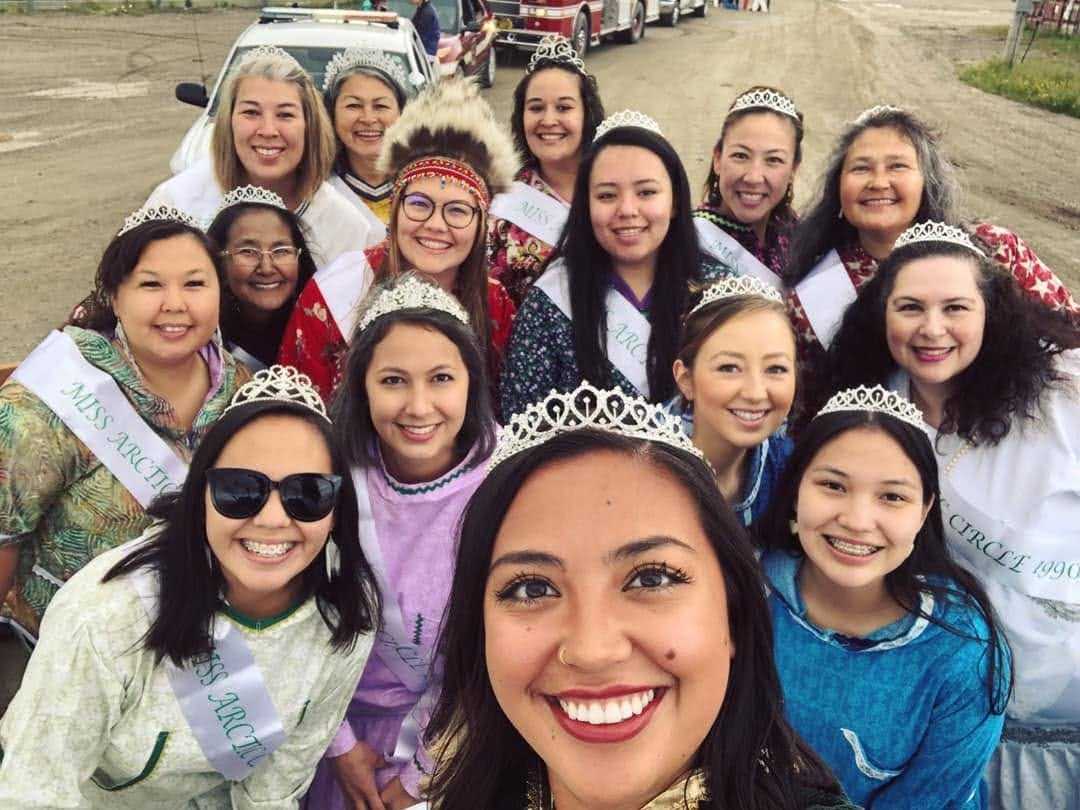
Former Miss Arctic Circles being honored in the 4th of July parade in Qikiqtaġruk (Kotzebue) in 2019. Photo provided by Macy Rae Kenworthy.
What stands out to me most now is how much the pageant has continued creating space for cultural knowledge to be shared publicly across generations. Through traditional regalia, storytelling, talent presentations, interviews, and conversations about Native issues, contestants continue teaching audiences about who we are as Iñupiat while also learning from one another. Even as styles, expectations, and communities change over time, the pageant continues bringing people together around our shared identity, history, and culture.
Today, when I look back at photographs from my year competing, I think less about winning and more about being part of something that existed long before me and will likely continue long after me. Every contestant who has stepped onto that stage since 1950 has carried her own version of what it meant to represent our people during her time. In many ways, Miss Arctic Circle has become its own form of remembering together, connecting generations of Iñupiaq women through culture, community, and the stories we continue carrying forward. ■
Kikiktagruk Macy Rae Kenworthy (2026 FORUM Storytelling Fellow) is Iñupiaq from Qikiqtaġruk (Kotzebue), Alaska. She grew up learning about her culture and Iñupiaq traditions between there and Sisualik, where her family has thrived for generations. Macy enjoys photography and videography, and has used these skills to document stories from across Alaska. She also enjoys spending as much time as she can out on the tundra with her family and her dog Kaiser Qipmiq, and in Anchorage with her partner and Lucky Dog.
FORUM is a publication of the Alaska Humanities Forum. FORUM aims to increase public understanding of and participation in the humanities. The views expressed by contributors are not necessarily those of the editorial staff or the Alaska Humanities Forum.
The Alaska Humanities Forum is a non-profit, non-partisan organization that designs and facilitates experiences to bridge distance and difference – programming that shares and preserves the stories of people and places across our vast state, and explores what it means to be Alaskan.

September 21, 2026 • Taylor Strelevitz
August 27, 2026 • Eiden Pospisil
July 24, 2026 • Annie Garay